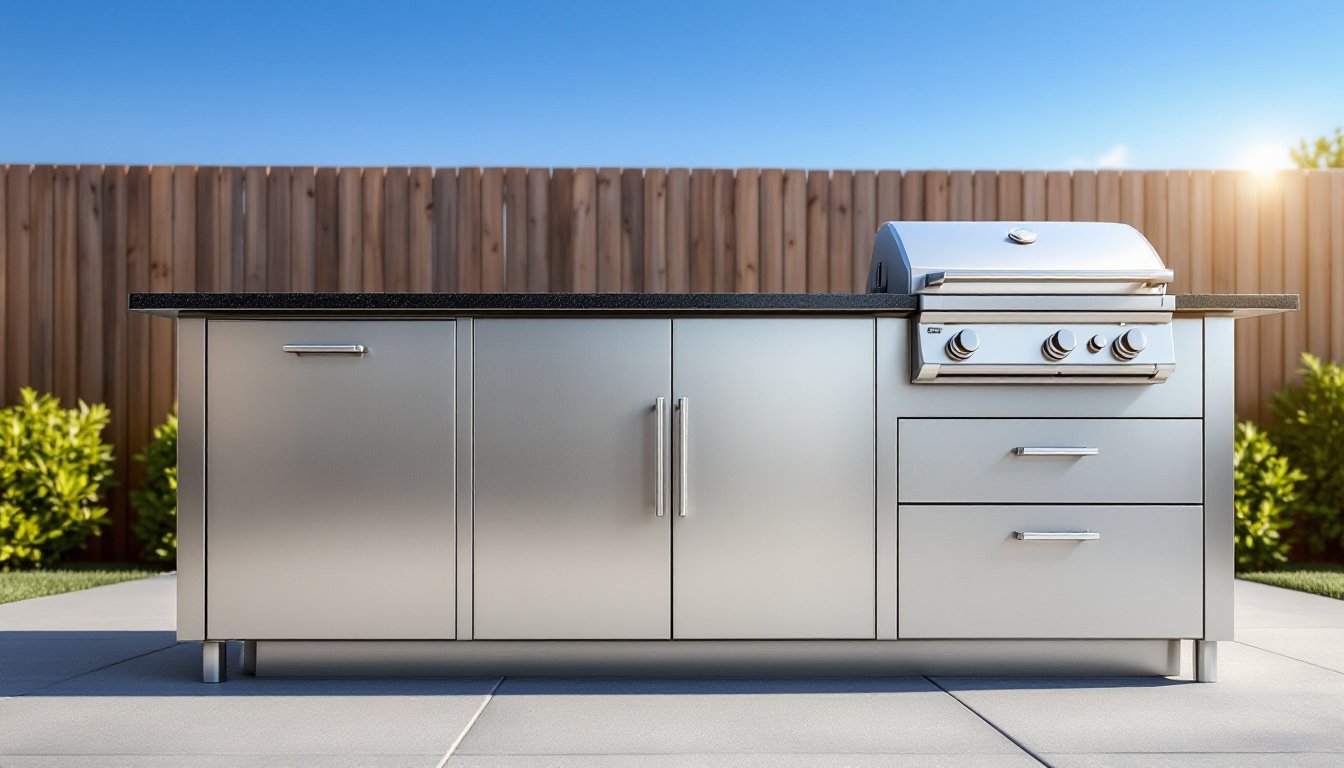
Outdoor kitchens have evolved from basic grills with side tables to fully equipped cooking zones that rival indoor setups. At the heart of any serious outdoor kitchen are the cabinets, and for homeowners who want storage that can withstand rain, salt air, UV exposure, and temperature swings without warping or rotting, stainless steel is the clear winner. Unlike wood or polymer cabinets that crack, fade, or attract pests, stainless steel outdoor kitchen cabinets deliver decades of performance with minimal upkeep. This guide breaks down what makes stainless steel the top choice, what features separate budget units from pro-grade builds, and how to install and maintain them for long-term durability.
Table of Contents
ToggleKey Takeaways
- Stainless steel outdoor kitchen cabinets resist corrosion, UV damage, and temperature extremes far better than wood, polymer, or painted steel alternatives, delivering decades of durability with minimal maintenance.
- Choose marine-grade stainless steel (304 or 316 alloy) for coastal properties and standard 304 stainless for most climates, as lower grades like 201 or 430 will rust in humid or saltwater environments.
- Quality stainless steel cabinets feature 18-gauge or thicker steel, fully welded construction, sealed/gasketed doors, stainless steel hardware, and adjustable leveling legs to ensure long-term performance.
- Proper installation requires a stable substrate (concrete patio with gravel base, compacted paver patio, or reinforced wood deck) and compliance with local codes for gas lines and GFCI-protected electrical outlets near sinks.
- Regular maintenance of stainless steel outdoor kitchen cabinets involves weekly cleaning with soapy water, quarterly hardware inspections, protecting against pool chemicals, and treating surface contamination immediately to prevent pitting.
Why Stainless Steel Is the Best Material for Outdoor Kitchen Cabinets
Stainless steel stands up to weather conditions that destroy other materials in months. Wood cabinets swell with humidity and splinter under UV exposure. Polymer cabinets fade and become brittle in direct sun. Painted steel rusts at the first scratch. Stainless steel resists all of these failure modes.
The material is non-porous, which means it won’t absorb moisture, harbor bacteria, or develop mold, critical for food prep areas. It’s also fire-resistant, a major advantage when cabinets sit inches from gas burners or charcoal grills. Unlike HDPE or resin cabinets, stainless won’t melt or warp from radiant heat.
Stainless steel cabinets handle temperature extremes without expanding or contracting enough to affect door alignment or structural integrity. They’re equally at home in Arizona heat and Minnesota winters. Coastal installations benefit most: salt air corrodes aluminum and eats through paint, but marine-grade stainless (more on that below) thrives in beach environments.
Pest resistance is another underrated benefit. Termites, carpenter ants, and rodents can’t chew through stainless, whereas wood and composite cabinets are vulnerable. For homeowners in areas with active wildlife or insect populations, that alone justifies the upfront cost.
Finally, stainless steel maintains its appearance with minimal effort. There’s no need to reseal, repaint, or restain. A wipe-down with soapy water keeps the surface clean, and even neglected stainless can be restored with a stainless steel cleaner and a microfiber cloth.
Key Features to Look for in Stainless Steel Outdoor Cabinets
Not all stainless steel cabinets are built the same. The difference between a unit that lasts five years and one that lasts thirty comes down to materials, construction, and hardware.
Gauge thickness matters. Outdoor cabinets should use 18-gauge or thicker stainless (the lower the number, the thicker the steel). Cheaper units use 20- or 22-gauge steel, which dents easily and flexes under load. An 18-gauge door panel feels solid when you close it: a 22-gauge door feels tinny.
Welded construction beats fastened or riveted frames. Welds create a continuous, sealed joint that keeps moisture out and adds rigidity. Look for full-perimeter welds on door frames and cabinet boxes, not just tack welds at the corners.
Adjustable leveling legs are essential, especially on patios or decks that aren’t perfectly flat. Legs should be stainless steel with a minimum 1-inch adjustment range. Plastic levelers crack: carbon steel rusts.
Sealed or gasketed doors prevent rain and dust from entering the cabinet interior. Even stainless steel benefits from keeping the inside dry, it reduces condensation and protects anything stored inside.
Hardware quality separates premium cabinets from budget builds. Hinges should be stainless steel with a minimum 90-degree swing: soft-close hinges are worth the upgrade for both convenience and longevity. Handles and pulls should be stainless or powder-coated steel, never zinc alloy (which corrodes quickly outdoors).
Marine-Grade Stainless Steel vs. Standard Stainless Steel
Marine-grade stainless steel (typically 304 or 316 alloy) contains molybdenum, which dramatically improves corrosion resistance in saltwater and chlorine environments. Standard 201 or 430 stainless, common in budget cabinets, will rust in coastal or pool-adjacent installations.
304 stainless is the baseline for quality outdoor cabinets. It’s the same alloy used in commercial kitchen equipment and resists rust in most climates. 316 stainless adds extra molybdenum and is the go-to for waterfront properties, boat docks, or anywhere within a mile of the ocean. It costs 20–30% more than 304, but it’s the only option that won’t pit or corrode in salt air.
If the product listing doesn’t specify the alloy, assume it’s 430 stainless (a lower grade with minimal corrosion resistance) or even 201 (which will rust in humid climates). Always verify the grade before buying.
Design Options and Configurations for Your Outdoor Kitchen
Stainless steel outdoor cabinets come in modular sizes that match standard indoor cabinetry widths: 18″, 24″, 30″, and 36″ wide units are most common. Base cabinets typically stand 34.5″ tall (matching indoor counter height) with 24″ depth to accommodate standard countertop overhangs.
Door styles range from single-door access cabinets for utensils and seasoning storage to double-door units for propane tanks, trash bins, or bulk supplies. Drawer units are ideal for organizing tools, grilling accessories, and small items: look for models with full-extension ball-bearing slides rated for outdoor use.
Combination units integrate drawers above a cabinet door, maximizing vertical storage. Some manufacturers offer pull-out trash drawer inserts and built-in paper towel holders, which keep consumables protected and accessible.
For grill islands, most homeowners build a configuration with a grill cutout cabinet (an open-back unit designed to house a drop-in grill) flanked by storage cabinets on either side. A typical layout might include a 36″ grill cabinet in the center, a 24″ door cabinet on the left (for propane or charcoal), and an 18″ drawer unit on the right (for tools).
Refrigerator cabinets are another popular option. These are open-frame units (no back panel) designed to house an outdoor-rated refrigerator with ventilation space. Ensure the cabinet interior dimensions match the fridge specs, accounting for airflow clearances.
Some cabinets come with finished sides (also called end panels), which give a cleaner look when a cabinet terminates an island. Unfinished sides are fine when cabinets sit adjacent to each other or against a wall.
Installation and Placement Considerations
Stainless steel cabinets are heavy, a 36″ base cabinet can weigh 80–120 pounds empty, so the substrate matters. They can sit directly on a concrete patio with leveling legs, but never place them on bare soil or gravel. Moisture wicks up through the legs, and even stainless will develop rust stains at contact points.
For wood decks, verify the joist spacing and load capacity. Outdoor cabinets loaded with supplies can exceed 200 pounds per linear foot. If joists are spaced 24″ on center, consider adding blocking or doubling joists under the cabinet footprint. Decking should be in good condition: rot or flex under the cabinets will lead to misalignment and door issues.
Paver patios work well if the base is properly compacted. A 4–6″ gravel base topped with 1″ of leveling sand and interlocking pavers provides a stable surface. Cabinets should sit on the pavers, not in gaps between them.
Countertop material influences installation sequence. Concrete, granite, and tile countertops are heavy and require cabinets to be level and secured before the top goes on. Some installers use construction adhesive along the cabinet tops to bond the countertop, but mechanical fasteners (stainless steel L-brackets) are more reliable for future repairs.
If the outdoor kitchen includes plumbing (sink) or gas lines (grill, burners), check local codes. Most jurisdictions require permits for gas line work, and it must be done by a licensed plumber or gas fitter. Electrical outlets near sinks must be GFCI-protected per NEC standards.
Anchoring cabinets isn’t always required, but it’s smart in high-wind areas. Use stainless steel tapcon screws into concrete or lag bolts into wood framing. Run a bead of silicone along the back edge where the cabinet meets a wall to keep water and debris from getting trapped behind the unit.
Maintenance and Care Tips for Long-Lasting Performance
Stainless steel is low-maintenance, but it’s not zero-maintenance. Regular care prevents surface staining and keeps hardware functioning smoothly.
Wipe down surfaces weekly with warm soapy water and a microfiber cloth. Avoid abrasive sponges or steel wool, they scratch the surface and create pitting sites where rust can start. For stubborn grease or smoke residue, use a stainless steel cleaner (available at any home center). Spray it on, wipe with the grain, and buff with a dry cloth.
Water spots and fingerprints are common complaints. A quick wipe with a damp cloth followed by a dry microfiber towel prevents buildup. If spots persist, a 50/50 mix of white vinegar and water works as a natural cleaner. Rinse and dry afterward.
Inspect door hinges and handles quarterly. Tighten any loose screws with a stainless steel screwdriver (carbon steel tools can leave rust marks). If hinges squeak, apply a silicone-based lubricant, never WD-40 or petroleum-based products, which attract dust and grime.
Check leveling legs twice a year, especially after freeze-thaw cycles or heavy rain. Cabinets can settle or shift, causing doors to hang unevenly. Adjust legs as needed to keep the cabinet level front-to-back and side-to-side.
Protect stainless steel from chlorine and pool chemicals. If cabinets are near a pool, rinse them with fresh water after chemical treatments or splashing. Chlorine can cause pitting even on marine-grade stainless if left to dry repeatedly on the surface.
Cover cabinets during the off-season if the outdoor kitchen won’t be used for months. A breathable, UV-resistant cover (not plastic tarps, which trap moisture) keeps dust, pollen, and bird droppings off the surface. Remove covers periodically to allow airflow and prevent condensation buildup.
If surface rust appears (usually from contamination, not the stainless itself), treat it immediately. Use a stainless steel rust remover or a paste of baking soda and water. Scrub gently with a soft cloth, rinse, and dry. For deeper rust, a non-scratch scrub pad (like Scotch-Brite’s white pads) can be used, but always rub with the grain.
Conclusion
Stainless steel outdoor kitchen cabinets are the most durable, weather-resistant storage solution for serious outdoor cooking spaces. Choosing marine-grade alloys, welded construction, and quality hardware ensures decades of performance with minimal maintenance. Proper installation on a stable substrate and routine care, wiping down surfaces, checking hardware, and protecting against pool chemicals, will keep the cabinets looking and functioning like new season after season.