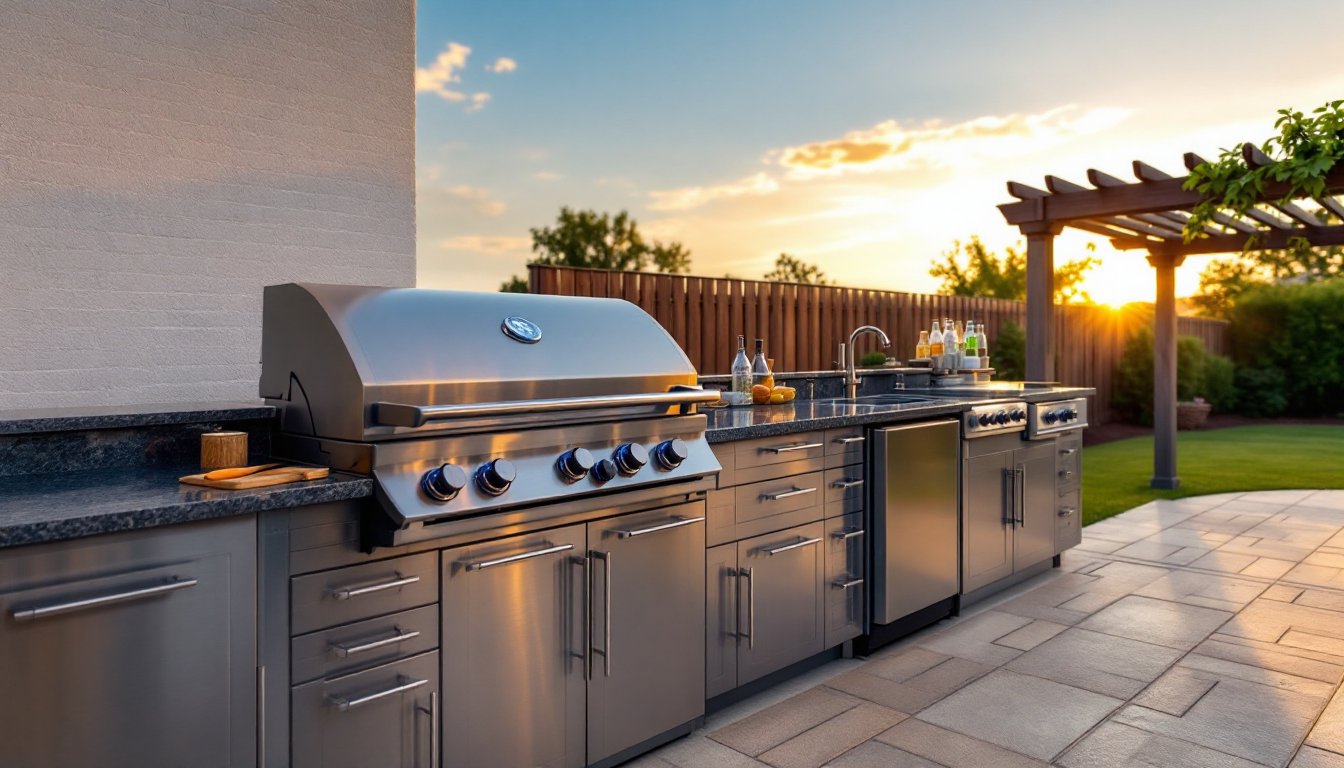
Transforming a patio or deck into a full-service outdoor cooking space used to mean months of planning, multiple contractors, and sticker shock from custom builds. Today’s outdoor kitchen packages have changed the game. These bundled systems offer everything from grills and storage to sinks and counters in coordinated sets that ship together and install faster than site-built alternatives. For homeowners ready to level up their backyard entertaining without the complexity of a from-scratch project, packages deliver professional results at predictable prices, if they know what to look for and how to match components to their space.
Table of Contents
ToggleKey Takeaways
- Outdoor kitchen packages bundle coordinated components like grills, cabinets, and countertops that are engineered to work together, eliminating the complexity and cost of custom builds.
- Choose between modular systems that offer flexibility and expandability over time, or all-in-one island packages that arrive pre-assembled but require careful measurement before ordering.
- Stainless steel grade (304 or 316), burner design, welded cabinet frames, and sealed countertop edges are critical quality indicators that ensure outdoor kitchen packages withstand years of weather exposure.
- Proper substrate preparation with compacted stone (not sand) and compliance with local building codes for clearances—typically 10 feet from combustibles and 36-48 inches above the cooking surface—are essential for safe installation.
- Budget 50% additional space beyond the package footprint for functional working clearances and workflow, and always hire licensed professionals for gas, electrical, and plumbing connections.
- Cover outdoor kitchen packages when not in use and perform initial maintenance like burning off manufacturing oils and regular stainless steel cleaning to maximize the lifespan of your investment.
What Are Outdoor Kitchen Packages?
An outdoor kitchen package is a coordinated set of cooking and prep components designed to work together right out of the box. Instead of sourcing a grill from one supplier, cabinets from another, and countertops from a third, packages bundle the essentials into a single purchase.
Most packages include a built-in grill (propane or natural gas), weather-resistant cabinetry (typically stainless steel or marine-grade polymer), and a countertop surface (concrete, granite, tile, or stainless steel). Mid-range and premium packages often add side burners, storage drawers, refrigerator compartments, or utility sinks.
The key advantage is compatibility. Manufacturers engineer these components to fit together without custom fabrication. Cutouts align, finishes match, and structural supports are rated for the combined load. This eliminates the guesswork that comes with mixing brands or retrofitting residential appliances into outdoor enclosures.
Packages don’t include utilities, gas lines, electrical wiring, and plumbing still require separate installation and often permits. They’re the above-ground structure, not the infrastructure underneath.
Types of Outdoor Kitchen Packages Available
The market offers two main approaches to packaging: modular units that build out over time and all-in-one island configurations.
Modular Outdoor Kitchen Packages
Modular systems use individual cabinet and appliance modules that snap or bolt together. Each module, grill insert, door/drawer combo, sink base, ships as a standalone unit with standard widths (typically 24″, 30″, or 36″ increments).
This format offers flexibility. Homeowners can start with a grill and side burner, then add a refrigerator module or pizza oven next season. It also simplifies transport and installation on elevated decks or through narrow side yards.
Cabinets are usually 304 or 316 stainless steel with adjustable legs for leveling on uneven pads. Budget-conscious builders can mix powder-coated steel frames with stainless doors to cut costs without sacrificing durability.
Tool requirements: socket set, level, drill with metal bits. Most modular connections use machine screws and alignment brackets. A second set of hands helps with positioning heavier grill modules (often 150+ lbs).
Pre-Assembled Island Packages
Island packages arrive as complete, factory-built units, sometimes in one piece, sometimes in two or three sections that bolt together on-site. They include integrated countertops, pre-installed appliances, and finished backs for freestanding placement.
These work best for flat concrete pads or pavers where the entire footprint is accessible. Delivery typically requires a 36″ minimum clearance for pallet jacks or liftgate trucks. Islands over 500 lbs need a solid substrate, compacted gravel base with pavers, a reinforced deck rated for point loads, or a poured slab.
Premium island packages often feature tile or granite countertops, built-in lighting, and weather-sealed compartments for electronics or paper goods. Some include pergola frames or umbrella mounts for shade integration.
The tradeoff: less configurability. What ships is what you get, so measurements and appliance placement need careful review before ordering.
Key Features to Look for in Outdoor Kitchen Packages
Not all packages weather the elements equally. The features below separate weekend warriors from decade-long investments.
Stainless steel grade matters. Look for 304 stainless as a baseline, it resists rust in most climates. Coastal installations or areas with heavy pool chlorine exposure should upgrade to 316 stainless, which adds molybdenum for better corrosion resistance. Avoid unspecified “stainless-look” finishes that may be powder-coated mild steel.
Grill BTU ratings get marketing hype, but burner design and grate material matter more. A 40,000 BTU grill with thick cast-iron grates and even flame distribution outperforms a 60,000 BTU unit with thin stamped burners and hot spots. Check if the package includes rotisserie brackets and infrared sear zones if high-heat searing is a priority.
Cabinet construction should have fully welded frames, not spot-welded or riveted corners that loosen over freeze-thaw cycles. Doors need continuous hinges (piano-style) or heavy-duty concealed hinges rated for outdoor humidity. Magnetic latches fail in dusty environments, prefer mechanical catches.
Countertop edges overhang cabinets by 1-1.5″ to protect doors and drawer fronts from drips. Granite and concrete tops need sealed edges to prevent water intrusion and freeze damage. Tile tops require frost-proof grout and a sloped surface (minimum 1/8″ per foot) to drain water.
Utility integration: If the package includes a sink, verify it has a drain assembly and P-trap, some bundles include the sink basin only. Refrigerator compartments should be UL-rated for outdoor use (these have sealed compressors and weatherproofed vents, unlike garage fridges).
Safety note: Any package with gas appliances must include an accessible manual shutoff valve within 6 feet of each connection. Natural gas installations require a licensed plumber and inspection in most jurisdictions.
How to Choose the Right Outdoor Kitchen Package for Your Space
Matching a package to a site goes beyond measuring the patio.
Start with clearances. Most building codes require 10 feet between a grill and any combustible surface (wood siding, vinyl fencing, overhead structures). The International Residential Code (IRC) also mandates clearances above the cooking surface, typically 36″ minimum to any ceiling or overhang. Verify local amendments: some jurisdictions increase this to 48″ for grills over 50,000 BTU.
Substrate prep is non-negotiable. Packages over 300 lbs need a stable, level base. Acceptable options include a 4″ concrete slab with rebar (overkill but permanent), compacted gravel with interlocking pavers (easier to level and adjust), or a deck with double joists under load points and blocking between joists to distribute weight.
Avoiding a paver base that settles? Use crushed limestone or granite fines for the leveling layer, not sand. Compact in 2″ lifts with a plate compactor. Sand shifts: stone locks.
Utility access drives layout. If the package includes a sink, the drain line needs a minimum 1/4″ per foot slope to a disposal point (French drain, drywell, or tied into the home’s sewer with a backflow preventer). Natural gas lines require a licensed gas fitter and pressure testing. Propane setups need a vaporizer or two-stage regulator if running multiple appliances, ask the supplier about BTU demand calculations.
Wind exposure affects performance. Grills on open decks or rooftops lose efficiency in steady wind. Some island packages include integrated windbreaks or accept aftermarket side panels. As an alternative, position the grill perpendicular to prevailing winds and use the cabinetry as a natural block.
Measure twice, budget for extras. Packages list the footprint of the cabinets, but working space needs 42-48″ of clearance behind the cook and at least 36″ on the sides for traffic flow. Total footprint often runs 50% larger than the package dimensions alone.
Installation and Setup Considerations
Even turnkey packages require planning before the truck arrives.
Delivery logistics: Confirm curbside vs. threshold delivery. Curbside means the freight company drops pallets at the street, getting 600 lbs of stainless steel to the backyard is on the homeowner. Threshold delivery usually covers the garage or first door. Budget $200-500 for a local moving crew if the install site requires navigating stairs, gates, or gravel paths.
Pre-installation checklist:
- Utilities stubbed and capped (gas, water, electric) within 12″ of planned appliance locations
- Base leveled to within 1/8″ over 8 feet (use a long straightedge and shim low spots)
- Access for a two-person team (most grill inserts need tandem lifting)
- PPE: work gloves (stainless edges are sharp), safety glasses, and steel-toed boots if working with heavy modules
Assembly sequence matters. Set corner or end modules first, check for level and square, then build toward the center. Tighten frame bolts in stages, finger-tight first pass, then torque evenly to avoid racking. Install countertops last to avoid damage during module adjustments.
Gas connections should be made by a licensed professional unless local code permits homeowner installs (rare). Use yellow CSST or black iron pipe, never standard rubber propane hose for permanent setups. Test all joints with leak detector solution: soapy water works in a pinch.
Electrical work (for refrigerators, lights, or outlets) must meet NEC Article 210.8(A)(3): outdoor receptacles require GFCI protection and weatherproof covers rated WR (weather-resistant). Hardwired appliances need a dedicated circuit: check the package specs for amperage.
Final step: run the grill on high for 20-30 minutes before the first cook to burn off manufacturing oils. Wipe down stainless surfaces with a microfiber cloth and mild detergent, abrasive cleaners scratch protective coatings.
Cover cabinets and grills when not in use. Even marine-grade materials degrade faster under constant UV and moisture exposure. Quality covers pay for themselves in extended component life.
Outdoor kitchens add measurable value and usability, but only when matched to the site and installed with the same care as indoor work. Treat the package as a starting point, not a shortcut, and the results rival custom builds at half the timeline.