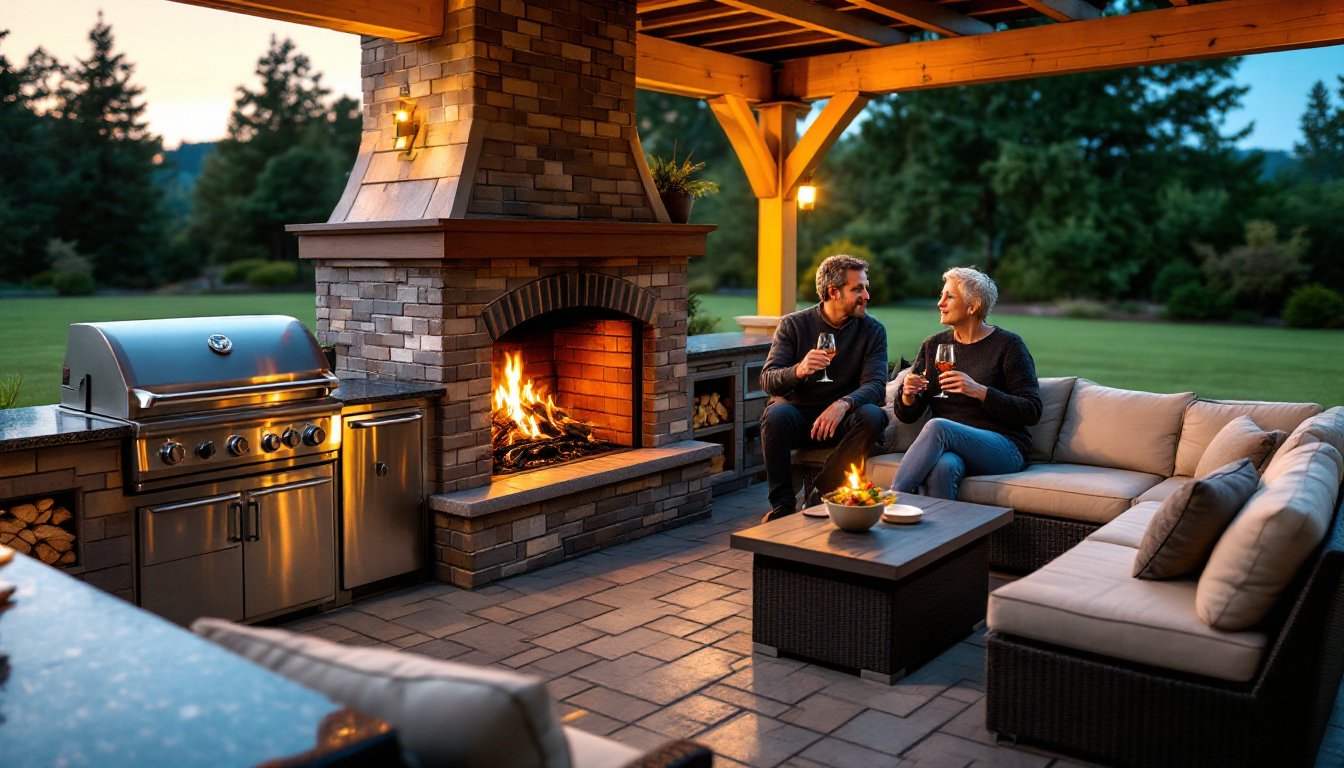
An outdoor kitchen becomes something more than a grill and countertop when a fireplace enters the picture. It transforms the space into a year-round gathering spot where cooking, warmth, and ambiance converge. Homeowners who add a fireplace to their outdoor kitchen extend their usable season, increase property value, and create a natural focal point that pulls people together. But planning one requires more than enthusiasm, it demands attention to ventilation, materials, layout, and local codes. This guide walks through the key decisions, from selecting a fireplace style that fits the cooking setup to budgeting for materials that won’t buckle under sun, rain, and temperature swings.
Table of Contents
ToggleKey Takeaways
- An outdoor kitchen with a fireplace extends the functional season into fall and spring while increasing property value and creating a natural focal point for gatherings.
- Choose between wood-burning fireplaces for authentic ambiance, gas units for convenience, or ethanol options for portability based on fuel availability and desired maintenance level.
- Proper placement at least 8-10 feet from the grill, combined with correct ventilation following the 3-2-10 rule, ensures both safety and smoke management in your outdoor kitchen.
- Use firebrick for the firebox interior, quality stone or manufactured veneer for the surround, and Type S or N mortar to withstand freeze-thaw cycles and weather exposure.
- Budget ranges from $3,000-$5,000 for basic masonry builds to $10,000-$20,000 for custom designs, plus ongoing maintenance costs like annual chimney inspections and sealer reapplication.
Why Add a Fireplace to Your Outdoor Kitchen
A fireplace does more than add visual appeal. It extends the functional calendar of an outdoor kitchen well into fall and early spring, making cool evenings comfortable without forcing everyone indoors. In regions where temperatures drop sharply after sunset, a fireplace can mean the difference between an underused patio and a space that sees action nine months a year.
From a resale perspective, outdoor kitchens with integrated fireplaces rank among the higher-return hardscape investments. Buyers recognize the lifestyle value, and appraisers note the craftsmanship. The fireplace also serves as an anchor point for furniture arrangement, naturally defining zones for cooking, dining, and lounging.
Beyond practicality, there’s the social factor. A fireplace draws people in. It becomes the spot where conversations linger after the meal’s done and the grill is cooling. For families who entertain regularly or simply want a retreat that feels distinct from the indoor living space, the fireplace shifts the outdoor kitchen from utility to destination.
Choosing the Right Fireplace Style for Your Outdoor Kitchen
The fireplace style should align with how the space will be used and what the structure can support. Wood-burning fireplaces deliver authentic ambiance and high heat output, but they require a full masonry chimney or a prefabricated metal chimney system rated for outdoor use. They also demand a steady supply of seasoned firewood and regular ash cleanout. Local regulations may restrict wood burning in certain air quality districts, so checking municipal codes before committing is essential.
Gas fireplaces (natural gas or propane) offer convenience and cleaner combustion. They light with the turn of a key or the flip of a switch, produce minimal ash, and allow precise flame control. Installation requires running a gas line, often a job for a licensed plumber or gas fitter, and ensuring proper venting if the unit is enclosed or recessed. Gas models come in vented, vent-free, and direct-vent configurations: outdoor installations typically use vented or direct-vent to manage airflow and safety.
Ethanol and gel-fuel fireplaces provide portability and no need for venting, but they produce less heat and aren’t practical for warming a large area. They work better as accent features than primary heat sources.
For a true outdoor kitchen fireplace, most builders opt for a built-in masonry wood burner or a gas insert framed within stone or brick. The choice hinges on local availability of fuel, desired maintenance level, and whether the homeowner values the ritual of fire-building or prefers push-button simplicity.
Essential Design Considerations and Layout Tips
Placement matters. The fireplace should sit upwind of the primary cooking area during prevailing wind conditions, so smoke and heat don’t blow directly into the chef’s workspace or across the dining table. A distance of at least 8 to 10 feet between the grill and the fireplace opening helps prevent heat overlap and keeps traffic flow manageable.
Layout should account for seating. Plan for a semicircle or L-shape of seating positioned 6 to 8 feet from the firebox to balance warmth with comfort. If the fireplace backs up to the kitchen’s main structure, ensure there’s enough clearance behind the firebox, minimum 2 inches for masonry, more for prefab units, to prevent heat transfer into combustible materials.
Incorporating built-in storage for firewood, fire starters, or propane tanks keeps the area tidy and functional. Niches flanking the fireplace can hold these items while adding visual symmetry.
Consider height and scale. A fireplace that’s too small gets lost: one that’s oversized can overwhelm a modest patio. For a typical 12×16-foot outdoor kitchen, a firebox opening around 30 to 36 inches wide strikes a good balance. Taller chimneys (at least 3 feet above the roofline of any nearby structure) draft better and reduce smoke spillage.
Ventilation and Safety Requirements
Proper ventilation isn’t optional, it’s a code requirement and a safety necessity. Wood-burning fireplaces need a chimney that extends above the roofline and meets the 3-2-10 rule: 3 feet above the roof penetration, 2 feet higher than any structure within 10 feet. This ensures draft and minimizes backdraft or downdraft issues.
Gas fireplaces may require a Class A chimney or direct-vent termination, depending on the model. Direct-vent units pull combustion air from outside and exhaust through a sealed pipe, making them safer for partially enclosed spaces like covered patios.
Clearances to combustibles are specified by the manufacturer and local building codes. Typical requirements include 12 to 18 inches from wood framing, siding, or cabinetry. Non-combustible materials like stone, brick, concrete block, or steel studs with cement board are standard for fireplace surrounds.
Install a spark arrestor on wood-burning chimneys to prevent embers from escaping. Keep a fire extinguisher rated for wood and grease fires (Class A and K) within easy reach. If the fireplace sits under a roof or pergola, ensure the structure is built with fire-rated materials or maintains adequate clearance, typically 3 feet minimum from open flame to any overhead combustible surface.
Some jurisdictions require a permit for outdoor fireplace construction, especially if it involves gas lines, masonry over a certain height, or connection to an existing structure. Check with the local building department before breaking ground.
Materials That Withstand the Elements
Outdoor fireplaces face temperature swings, moisture infiltration, UV exposure, and freeze-thaw cycles. Material selection directly impacts longevity and maintenance.
Firebrick lines the firebox interior. It’s engineered to handle sustained high heat without cracking. Standard clay brick or concrete block can spall or crumble under repeated thermal stress, so firebrick is non-negotiable for the combustion chamber.
Natural stone, such as limestone, bluestone, or granite, offers durability and a high-end look. It handles weathering well but can be prone to staining from soot or water if not sealed properly. A penetrating sealer applied every 1-2 years helps maintain appearance. Avoid sedimentary stones like sandstone in the immediate firebox area: they can flake under heat.
Manufactured stone veneer provides the look of natural stone at lower cost and weight. Quality products are made from concrete and iron oxides and hold up well outdoors. Ensure the veneer is rated for exterior use and applied over a weather-resistant barrier and metal lath.
Concrete block forms a sturdy base and is often used for the fireplace structure before facing it with stone or stucco. Use standard 8×8×16-inch CMUs for the core, then finish with a veneer or parge coat.
Stainless steel and powder-coated steel work for fireplace hoods, vents, and trim. Choose 304 or 316-grade stainless for coastal or high-humidity areas to resist corrosion.
For countertops and hearth extensions, granite, concrete, or porcelain pavers rated for outdoor use and freeze-thaw resistance perform reliably. Avoid standard indoor tile: it can crack under temperature extremes.
All mortar and grout should be Type S or Type N masonry mortar, which offers better flexibility and weather resistance than Type M. Pointing and cap stones should be tooled and sealed to shed water away from joints.
Cost Factors and Budgeting for Your Project
Costs vary widely depending on fireplace type, material choice, labor rates, and site conditions. A basic wood-burning masonry fireplace integrated into an outdoor kitchen typically starts around $3,000 to $5,000 for materials and a DIY build using concrete block, firebrick, and stone veneer. Professional masonry labor can add $2,500 to $6,000, depending on complexity and regional rates.
A prefabricated wood or gas fireplace unit ranges from $1,500 to $4,000 for the firebox alone. Installation costs depend on whether gas lines need to be run (add $500 to $1,500 for a licensed plumber) and whether a chimney chase or vent system is required (another $1,000 to $3,000).
Custom designs with full stone cladding, built-in seating, and integrated lighting can push the total to $10,000 to $20,000 or more. High-end materials like honed granite or imported stone increase the budget further.
Factor in permitting fees ($100 to $500, depending on jurisdiction) and site prep, grading, concrete footings, or a reinforced slab, which can add $500 to $2,000.
Budget for ongoing costs, too. Wood-burning fireplaces require annual chimney inspections and cleanings ($150 to $300). Gas units need occasional valve and ignition system checks. Sealers, replacement firebrick, and minor repointing are normal maintenance expenses over the fireplace’s life.
To keep costs in check, consider a phased approach: install the fireplace structure first, then add features like side cabinets, a built-in wood box, or decorative tile accents in later seasons as budget allows.
Conclusion
An outdoor kitchen with a fireplace isn’t just a backyard upgrade, it’s a deliberate investment in livability and value. The key is matching the fireplace type to how the space will actually be used, choosing materials that can take a beating from the weather, and respecting the clearances and ventilation requirements that keep everyone safe. Whether the homeowner opts for the crackle of a wood fire or the convenience of gas, planning carefully upfront makes the difference between a feature that thrives for decades and one that becomes a maintenance headache.