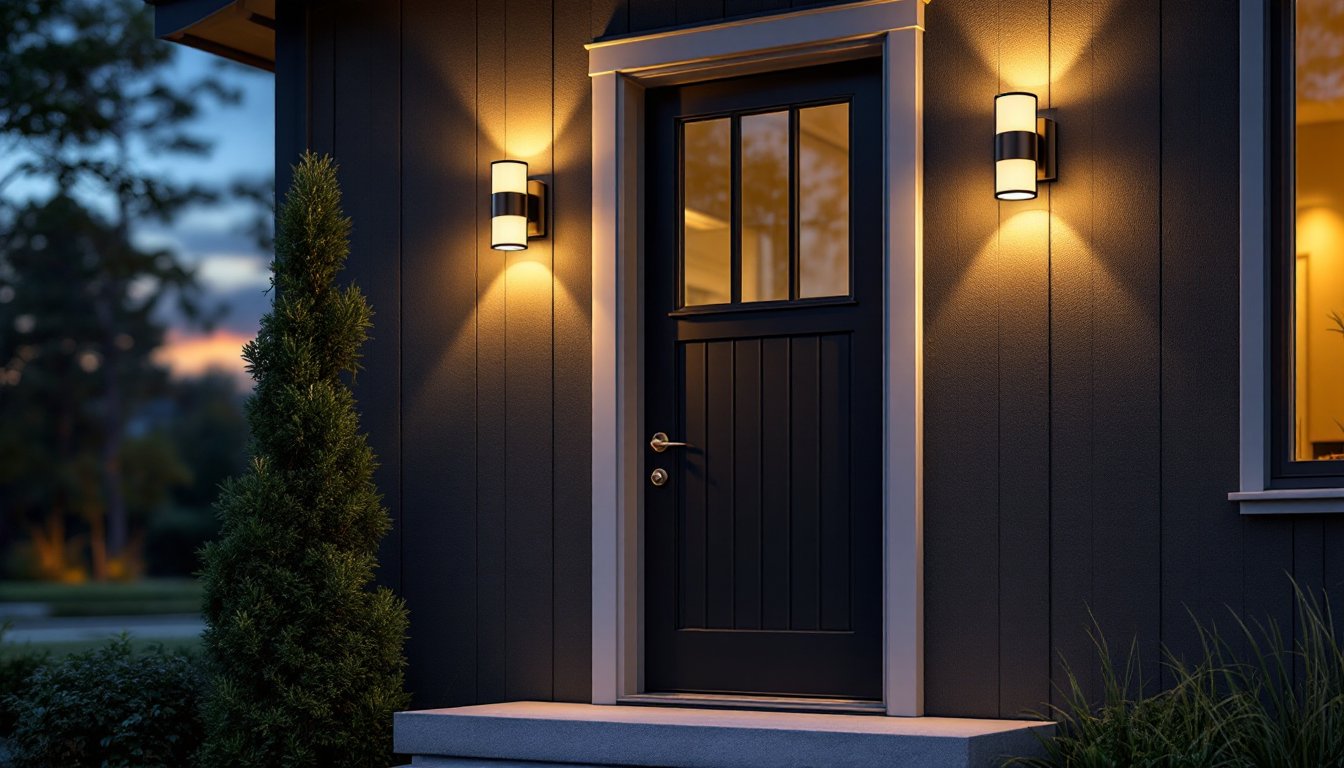
Outdoor wall sconces do more than light up a porch, they define curb appeal, improve safety, and extend usable hours for outdoor spaces. Whether flanking a front door, lining a walkway, or illuminating a deck, the right sconce balances function with style. But with thousands of options spanning modern LEDs to vintage-inspired lanterns, choosing the right fixture means understanding placement rules, wiring requirements, and how different bulb technologies perform in weather extremes. This guide walks through everything needed to select, install, and optimize outdoor sconces for any home exterior.
Table of Contents
ToggleKey Takeaways
- Outdoor wall sconces enhance curb appeal, improve safety, and extend usable hours for outdoor spaces by providing task, accent, and security lighting.
- Proper placement of outdoor wall sconces should range from 66 to 72 inches high with scaling roughly one-quarter to one-third the height of the door or wall section they illuminate.
- Choose wet-rated fixtures for direct rain exposure and check IP ratings (IP65 or higher) to ensure dust and water protection for exterior environments.
- LED technology cuts electricity costs by 80–90% compared to incandescent bulbs, with a 10-watt LED delivering the same output as a 60-watt incandescent while lasting 15–25 years.
- Symmetrical mounting on either side of entry doors at equal heights (18–24 inches from edges) creates maximum visual impact and enhances home architecture.
- Select fixtures with standard E26 sockets for bulb replaceability rather than integrated LEDs that become disposable when diodes fail after 25,000+ hours.
What Are Outdoor Wall Sconces and Why Do They Matter?
Outdoor wall sconces are wall-mounted light fixtures designed to withstand moisture, temperature swings, and UV exposure. Unlike interior sconces, they carry wet or damp location ratings (UL-listed) and use sealed housings to protect wiring and sockets.
They serve three primary roles: architectural accent lighting that highlights texture and materials, task lighting for entries and stairs, and security lighting that eliminates dark zones around the home. A well-placed sconce can make the difference between tripping on a step or navigating safely after dark.
Most residential codes don’t mandate specific exterior lighting, but the International Residential Code (IRC) requires adequate illumination for stairways with four or more risers. Local ordinances may also regulate light trespass, fixtures that spill onto neighboring properties. Choosing sconces with downward-focused beams or shielded bulbs helps keep light where it belongs.
Wet-rated fixtures handle direct rain exposure (under eaves, near pools), while damp-rated models suit covered porches. Check the fixture’s IP rating (Ingress Protection) if specifics matter: IP65 or higher means dust-tight and protected against water jets.
Types of Outdoor Wall Sconces for Every Style
Modern and Contemporary Sconces
Geometric shapes, clean lines, and minimalist finishes define modern outdoor sconces. Materials lean toward powder-coated aluminum, stainless steel, and frosted glass or acrylic diffusers. LED-integrated models dominate this category, often with adjustable color temperatures (2700K warm white to 4000K cool white) and built-in dimming.
Up/down wall sconces, fixtures that throw light both upward and downward, create dramatic wall washing effects on textured siding or stone. They work especially well on contemporary homes with vertical siding or board-and-batten exteriors. Look for models with replaceable LED modules rather than sealed units: when the diodes fail after 25,000+ hours, swapping a module beats replacing the entire fixture.
Cylindrical and rectangular designs in matte black or brushed nickel pair well with fiber cement siding, metal panels, and large-format windows. For coastal areas, choose marine-grade finishes (316 stainless steel or powder coat over hot-dipped galvanized steel) to resist salt corrosion.
Traditional and Farmhouse Styles
Lantern-style sconces, carriage lights, and barn lights anchor traditional and farmhouse exteriors. Materials shift to cast aluminum, brass, copper, and seeded or clear glass panels. Many feature Edison-style LED bulbs that mimic incandescent filaments while drawing under 10 watts.
Gooseneck barn lights, fixtures with curved arms extending from a round or dome backplate, suit farmhouse, craftsman, and cottage homes. They’re typically wet-rated and use standard E26 medium-base bulbs, making replacement simple. Porcelain enamel finishes hold up better than spray paint in high-UV areas.
Coach lights and carriage lanterns with beveled glass and oil-rubbed bronze or aged copper finishes complement colonial, Tudor, and Cape Cod architecture. These often include photocell sensors or dusk-to-dawn controls built into the fixture base. For authenticity, choose models with real metal construction rather than resin castings, tap the backplate: metal rings, resin thuds.
Rustic and industrial sconces with exposed bulbs, wire cages, or galvanized finishes bridge farmhouse and modern industrial styles. These work on barn conversions, workshop exteriors, and modern farmhouse builds.
How to Choose the Right Outdoor Wall Sconce for Your Space
Scale matters first. A sconce should occupy roughly one-quarter to one-third the height of the door or wall section it illuminates. For an 80-inch door, that’s a 20–27-inch tall fixture. Undersized sconces look lost: oversized ones overwhelm.
Mounting height typically ranges from 66 to 72 inches from the finished grade to the center of the fixture. This keeps light at eye level for visitors while illuminating steps and thresholds. For garage sconces or barn lights, mount at 8 to 10 feet to cover wider areas.
Lumens and beam spread determine how much area each sconce covers. For task lighting at entries, aim for 600–900 lumens per fixture. Ambient or accent lighting along a fence or pergola can drop to 200–400 lumens. Wide flood beams (90°+) light broad areas: narrow spots (30–40°) highlight architectural features.
Color temperature affects mood and visibility. 2700K (warm white) feels inviting and mimics incandescent bulbs, ideal for front entries. 3000K (soft white) offers slightly crisper light without harshness, suitable for most applications. Avoid 5000K+ (daylight) unless security or task visibility outweighs aesthetics: it reads cold and commercial.
Finish durability depends on climate. Powder-coated aluminum resists rust and holds color longer than spray-painted steel. Brass and copper patina naturally unless lacquered, decide if aged character or polished shine suits the home. In coastal or high-humidity areas, specify marine-grade or saltwater-resistant finishes.
Bulb type and replaceability matter long-term. Integrated LEDs offer sleek designs but become disposable when diodes fail. Standard E26 sockets let homeowners swap bulbs as technology improves or color preferences change.
Installation and Placement Tips for Maximum Impact
Safety first: Outdoor sconce installation involves working with 120V AC wiring. Turn off the circuit at the breaker, verify power is off with a non-contact voltage tester, and follow all National Electrical Code (NEC) requirements. If unfamiliar with electrical work or if the project involves running new wire through walls, hire a licensed electrician. Most jurisdictions require permits for new circuits or outdoor receptacles.
Mounting to siding requires hitting structural support. Use a stud finder to locate wall studs or blocking. If the desired location falls between studs, install 2×6 or 2×8 blocking between studs behind the siding, this requires opening the wall from inside or removing a siding section. For brick or stucco, use masonry anchors or tapcon screws rated for outdoor use.
Weatherproofing the junction box prevents water infiltration. Use a weatherproof electrical box with a gasketed cover, and apply a bead of silicone caulk around the fixture’s backplate after mounting. Don’t overtighten mounting screws, cracking the backplate voids weather seals.
Symmetry enhances impact. Flank entry doors with matching sconces mounted at equal heights and distances (typically 18–24 inches from door edges). For garage doors, center a single large sconce or space two smaller fixtures evenly across the width.
Layering light sources creates depth. Combine sconces with path lights, overhead porch fixtures, or landscape uplights to avoid flat, single-source illumination. Overlapping light pools improve visibility and add visual interest.
Switch and control placement should be intuitive. Install switches inside near the door, 48 inches above finished floor per standard practice. For multiple exterior fixtures, consider a multi-location switch or smart switch for centralized control. Photocells and timers automate operation but add a manual override for flexibility.
Energy Efficiency and Smart Lighting Options
LED sconces dominate the efficiency conversation. They draw 80–90% less power than incandescent equivalents and last 15–25 years under typical use (three hours per night). A 10-watt LED delivers the same lumens as a 60-watt incandescent, cutting electricity costs from roughly $7.23 annually to $1.20 (based on $0.12/kWh and three hours daily).
Color Rendering Index (CRI) affects how accurately colors appear. Look for CRI 80+ to render skin tones and landscaping naturally. Cheaper LEDs with CRI below 70 make everything look washed out.
Smart outdoor sconces integrate with home automation systems via Wi-Fi, Zigbee, or Z-Wave protocols. Control brightness, set schedules, and automate based on sunset/sunrise times or motion detection, all from a smartphone. Motion-sensing sconces ramp from dim (10–20%) to full brightness when movement is detected, balancing security with energy savings. Adjust sensitivity and timeout duration to avoid triggering from passing cars or wandering wildlife.
Solar-powered sconces eliminate wiring but come with trade-offs. They need six-plus hours of direct sunlight daily to charge adequately. Performance drops in winter or shaded locations, and light output rarely exceeds 100–200 lumens. They suit accent lighting on sheds or fences but can’t replace hardwired fixtures for task or security lighting.
Dimmable LEDs require compatible dimmers: not all LEDs dim smoothly. Check fixture specs for a list of approved dimmer models. Flickering or buzzing at low levels indicates incompatibility.
Energy Star-certified fixtures meet strict efficiency and longevity standards. They’re a safe bet when comparing unfamiliar brands, ensuring minimum performance thresholds for lumens per watt and rated lifespan.