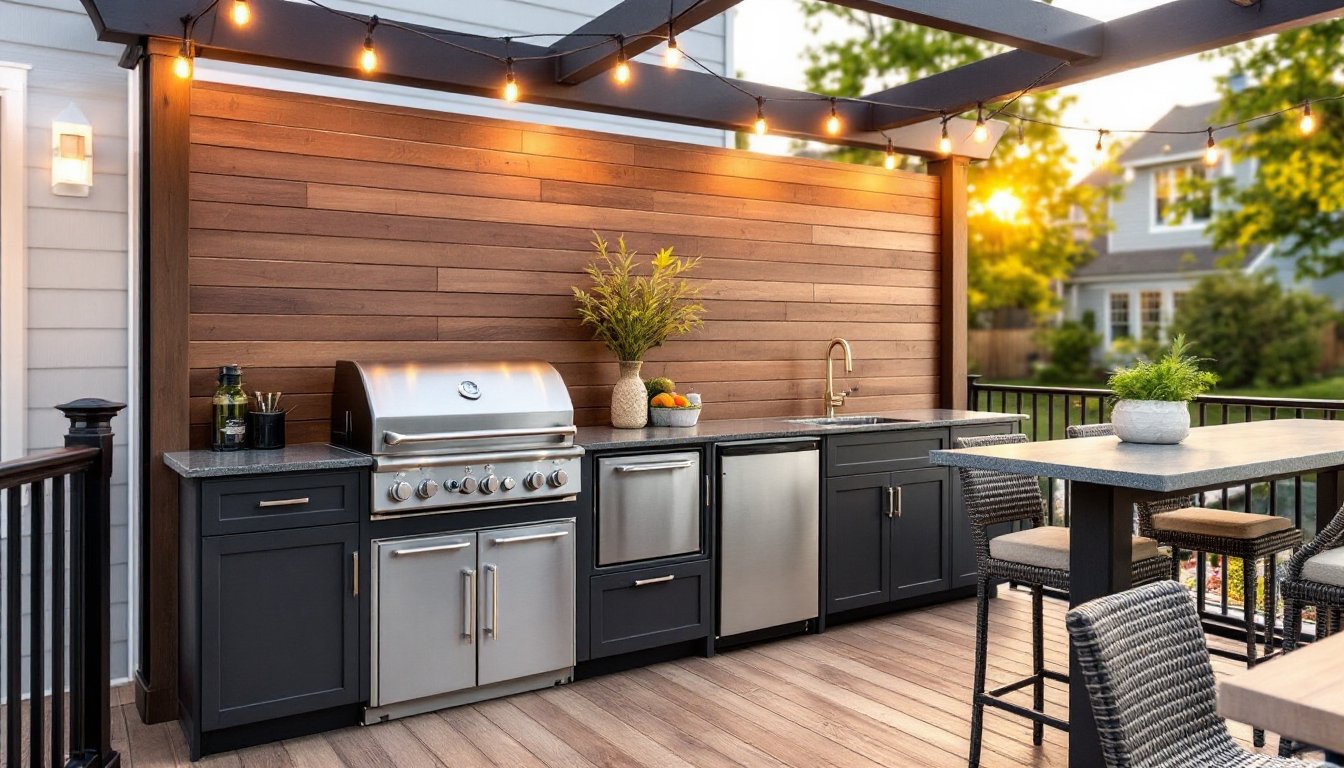
Building an outdoor kitchen on a deck transforms ordinary backyard entertaining into something special. Unlike ground-level patios that require extensive excavation and concrete work, deck-mounted kitchens leverage existing structure, but they come with unique challenges. Load capacity, material selection, and proper ventilation aren’t optional considerations: they’re the difference between a deck that hosts cookouts for years and one that fails inspection or worse. This guide walks through the structural realities, design decisions, and material choices that turn a deck into a fully functional outdoor cooking space.
Table of Contents
ToggleKey Takeaways
- An outdoor kitchen on a deck requires structural evaluation before installation, as residential decks typically support only 40–50 pounds per square foot, far less than the combined weight of grills, refrigerators, and countertops.
- Efficient layout follows the work triangle principle with a grill, sink, and prep surface positioned within a few steps, plus 18–24 inches of counter space on either side of the grill for safe cooking.
- Composite decking, marine-grade polymer cabinetry, and outdoor-rated materials like porcelain tile or stainless steel resist freeze-thaw cycles and moisture better than traditional wood or interior materials.
- Gas lines must be installed by a licensed professional using black iron or CSST tubing, and propane tanks require secure upright storage outside enclosed spaces per NFPA 58 guidelines.
- Permits are mandatory for structural modifications, gas line installation, and electrical work to ensure code compliance and protect against liability if the deck fails.
- Outdoor kitchen projects return 50–70% of their cost at resale, but ROI depends on proper structural planning and material selection that withstand weather exposure.
Why Build an Outdoor Kitchen on Your Deck?
Decks offer elevation, accessibility, and established access points that ground-level outdoor kitchens can’t match. The typical deck already connects to the home’s main floor, cutting the distance between indoor prep areas and outdoor cooking zones. No hauling ingredients down stairs or across a yard.
From a construction standpoint, a deck provides a defined footprint and, in many cases, partial framing already in place. Homeowners avoid the cost and labor of pouring footings and concrete slabs required for patio kitchens. That said, most residential decks weren’t engineered to support the concentrated weight of grills, refrigerators, masonry counters, or multiple people gathered in one zone.
The value proposition is real. According to Remodeling Magazine’s Cost vs. Value Report, outdoor kitchen projects consistently return 50–70% of their cost at resale in many markets, and deck-based installations often come in at lower initial expense than ground-level builds. But ROI depends entirely on doing the structural assignments upfront.
Planning Your Deck Outdoor Kitchen: Key Considerations
Weight Load and Structural Support Requirements
Residential decks are typically designed to handle 40–50 pounds per square foot (psf) live load per the International Residential Code (IRC). An outdoor kitchen easily exceeds that. A built-in gas grill weighs 150–300 lbs, a compact outdoor refrigerator adds another 100–150 lbs, and stone or concrete countertops can run 15–20 lbs per square foot for a 1.5-inch slab.
Before placing anything permanent, a homeowner should consult the deck’s original plans or hire a structural engineer to evaluate joist spacing, beam size, and footing depth. Many installations require sistering additional joists (attaching new 2×8 or 2×10 boards alongside existing ones) or adding a dedicated support post beneath the kitchen zone. Retrofit posts need proper footings, typically 12 inches in diameter, extending below the frost line.
Permits are almost always required when modifying deck structure or adding gas lines. Electrical and plumbing work must meet National Electrical Code (NEC) and local plumbing standards. Skipping permits risks failed inspections during a future home sale and, more seriously, liability if the deck fails.
Layout and Space Optimization
Efficient outdoor kitchens follow the classic work triangle: grill, sink, and prep surface positioned within a few steps of each other. On a deck, space is finite. A functional layout requires:
- Minimum 3 feet of clearance behind the cook for safe movement
- 18–24 inches of counter space on either side of the grill for plating and utensils
- 36-inch walkways if the deck serves as a pass-through to stairs or other areas
Corner and L-shaped configurations maximize usable counter area without dominating the entire deck. Avoid placing the grill directly against the house wall or under eaves: clearances of 10 feet from combustible surfaces are common in manufacturer specs and fire codes, though specifics vary by jurisdiction.
For decks under 200 square feet, consider a mobile cart-style grill and modular cabinetry instead of a full built-in island. Flexibility preserves space for seating and traffic flow.
Essential Components for a Functional Deck Kitchen
Start with the heat source. Built-in gas grills offer convenience and consistent temperature control but require a natural gas line (needs a licensed plumber and permit) or propane with proper tank storage. Propane tanks must be secured upright, stored outside enclosed spaces, and kept away from ignition sources per NFPA 58 guidelines.
Countertop space is non-negotiable. Even a modest setup benefits from 4–6 linear feet of work surface. Materials need to handle heat, moisture, and UV exposure, more on that in the next section.
A sink adds serious functionality, but it means running both water supply and drainage. PEX supply lines are freeze-resistant and easier to route than copper, though they require protection from UV if exposed. Drainage can tie into the home’s system if the deck is close and slopes allow, or it can run to a dry well or French drain if local codes permit greywater discharge. Either way, it’s not a DIY job for most homeowners unless they have plumbing experience.
Refrigeration keeps drinks cold and ingredients fresh. Compact outdoor-rated fridges (look for stainless steel construction and weatherproof seals) draw 3–5 amps and need a dedicated GFCI-protected 120V outlet per NEC 210.8. Some models include icemakers, which require both power and a water line.
Storage protects tools, propane accessories, and serving ware. Marine-grade polymer cabinetry resists moisture better than wood and costs less than stainless, though stainless offers the most durability if budget allows. Include a trash pullout or bin to keep the deck tidy during prep and cleanup.
Don’t overlook lighting. Task lighting over the grill and prep zones (LED strips or low-voltage puck lights) makes evening cooking safer, and ambient string lights or post caps improve usability after dark. All outdoor electrical fixtures must be wet-location rated.
Material Selection for Durability and Safety
Decks endure freeze-thaw cycles, UV bombardment, and moisture, conditions that wreck indoor materials fast. Countertops see the worst of it. Granite and concrete handle heat and weather but add serious weight, often requiring structural reinforcement. Tile over cement backer board offers a middle ground: lighter than slab stone, customizable, and repairable, though grout lines need sealing annually to prevent water intrusion.
Porcelain tile rated for outdoor use resists freeze-thaw cracking better than ceramic. Stainless steel counters are lightweight, easy to clean, and fireproof, but they scratch, dent, and show fingerprints. They’re ideal for commercial-style setups where function trumps aesthetics.
Cabinetry material determines longevity. Marine-grade polymer (brands like WeatherStrong or NatureKast) won’t rot, rust, or swell. It’s the go-to for coastal or high-humidity climates. Stainless steel cabinets last decades and handle saltwater exposure, but they cost two to three times more than polymer. Avoid wood or MDF, even if labeled “exterior grade”, it will eventually fail in a wet, freeze-prone environment.
For the deck surface itself, composite decking holds up better than wood near cooking zones. It won’t splinter, needs no annual staining, and resists grease stains. If the existing deck is wood, consider placing a non-combustible pad, such as a cement board or steel sheet, under and around the grill. This protects decking from grease fires and radiant heat. Some jurisdictions require it by code.
Gas lines must be black iron or CSST (corrugated stainless steel tubing), installed by a licensed professional. Flexible connectors should be outdoor-rated and replaced every few years. Never use standard rubber hose for permanent installations.
Safety note: Always wear cut-resistant gloves when handling metal edging or flashing, safety glasses during cutting or drilling, and a dust mask when cutting cement board or composite materials. Have a 10-pound ABC fire extinguisher mounted within ten feet of the grill.
Conclusion
An outdoor kitchen on a deck can extend living space and upgrade how a household entertains, but only if the structure can carry it and the materials can take the weather. Start with a structural evaluation, plan the layout around realistic clearances and workflow, and choose materials that won’t rot, rust, or crack after one winter. Done right, a deck kitchen becomes the backyard anchor for years of meals and gatherings.