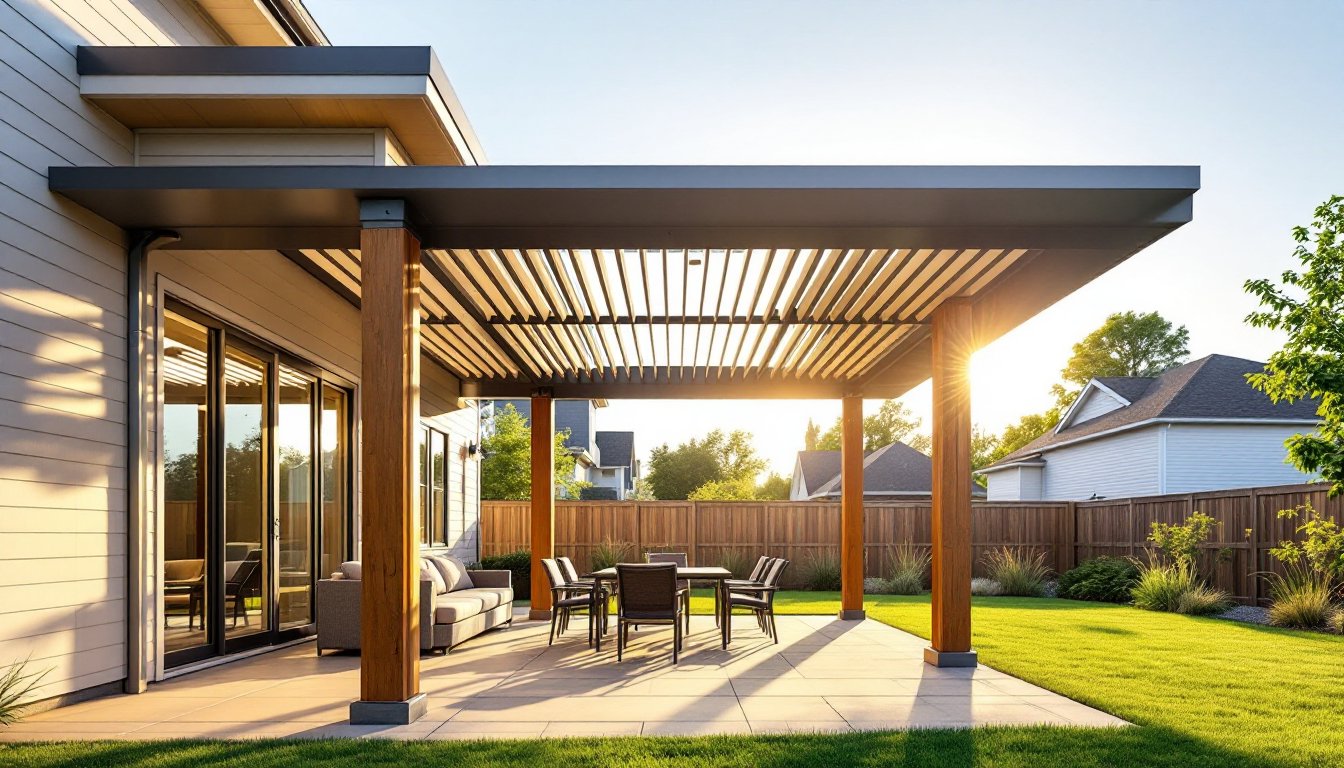
Adding a covered patio structure transforms outdoor space from seasonal use to year-round living. Whether someone wants relief from afternoon sun, protection from surprise rain, or a defined entertaining zone, the right structure delivers function and curb appeal. But the options go way beyond basic aluminum awnings. From adjustable louvered roofs to traditional pavilions, homeowners now have access to designs that balance weather protection, ventilation, and architectural style, plus materials engineered to last decades with minimal upkeep. Choosing the right setup means understanding structure types, material trade-offs, and the code requirements that keep projects legal and safe.
Table of Contents
ToggleKey Takeaways
- Outdoor covered patio structures require building permits and must comply with IRC guidelines for footings, beam spans, and load-bearing capacity, with frost line depths ranging from 12 to 48+ inches depending on your region.
- Louvered roof systems offer superior weather control with adjustable slats and integrated drainage, costing $25–$60 per square foot installed, while traditional pergolas provide more affordable 50–70% shade with partial sun penetration.
- Material selection—pressure-treated lumber ($8–$12 per post), cedar/redwood, aluminum, or engineered lumber—impacts both durability and maintenance, with engineered lumber delivering superior span capacity and dimensional stability.
- Proper ledger attachment using 1/2-inch lag screws every 16 inches with flashing membrane protection is critical for preventing water intrusion and structural failure in house-attached structures.
- Roof pitch, gutter placement, and drainage design must be planned before construction to prevent standing water and ice dams, with flat roofs requiring minimum 1/4 inch slope per foot.
- Verify local zoning setbacks, HOA restrictions, and lot coverage limits early in your project planning to avoid costly redesigns and permit delays.
What Are Outdoor Covered Patio Structures?
Outdoor covered patio structures are permanent or semi-permanent installations designed to provide overhead shelter for exterior living spaces. Unlike portable shade solutions, these structures typically anchor to a foundation, attach to the home, or stand independently on posts set in concrete footings.
The defining feature is a roof or overhead coverage, solid, slatted, fabric, or adjustable, that blocks sun, rain, or both. Some designs prioritize airflow and dappled shade: others create fully enclosed, weatherproof rooms. Most sit on concrete piers or footings that extend below the frost line (check local building codes for frost depth requirements, which range from 12 inches in mild climates to 48+ inches in northern regions).
Because these structures often exceed 200 square feet or attach directly to a home’s roofline, they typically require a building permit and must comply with International Residential Code (IRC) guidelines for footings, beam spans, and load-bearing capacity. Local zoning may also regulate setbacks from property lines, maximum height, and lot coverage percentage. Anyone planning a covered patio should check with their municipal building department before ordering materials or breaking ground.
Popular Types of Covered Patio Structures
Pergolas and Louvered Roof Systems
Pergolas feature open rafter beams spaced across support posts, creating a grid that allows partial sun penetration. Traditional pergolas offer 50–70% shade, depending on beam spacing and orientation. Many homeowners add retractable fabric shades, climbing vines, or clear polycarbonate panels between rafters to adjust coverage.
Louvered roof systems take the pergola concept further with adjustable aluminum or vinyl slats that rotate from fully open to closed. Users can dial in shade or close louvers completely during rain, channeling water to integrated gutters. These systems cost significantly more, often $25–$60 per square foot installed, but deliver weather control no fixed pergola can match. Motor-driven models with rain sensors and smartphone controls add another $1,500–$3,000 to the project.
Both styles work as freestanding structures or attached to the house via a ledger board lagged into wall studs or rim joists (use galvanized or stainless fasteners and apply flashing tape behind the ledger to prevent water intrusion).
Gazebos and Pavilions
Gazebos are standalone structures with a solid or shingled roof, typically hexagonal or octagonal, and fully open sides. They anchor on posts set in concrete and offer 360-degree ventilation with complete overhead protection. Most use asphalt shingles or metal roofing to match the main house.
Pavilions share the freestanding, open-sided design but employ a rectangular or gabled roof on four or more corner posts. Think of them as simplified barns without walls. Because pavilions often span 12×16 feet or larger, they require careful attention to beam sizing, doubled 2×8 or engineered lumber beams are common for spans over 10 feet, and rafters must be sized for local snow load (check IRC tables or consult an engineer in heavy snow zones).
Both gazebos and pavilions excel at defining separate outdoor rooms, grilling stations, hot tub enclosures, or dining areas, away from the main house. They do not provide lateral weather protection, so rain driven by wind will still reach seating areas.
Patio Covers and Awnings
Patio covers are solid-roof extensions attached to the house, essentially creating a shed-style roof over a concrete slab or deck. They use either corrugated polycarbonate panels (translucent, affordable, filters UV), insulated aluminum panels (blocks heat transfer, paintable), or traditional shingles and plywood decking to match existing roofing.
Solid patio covers require proper slope, minimum 1/4 inch per foot, to shed water and prevent ponding. Attached covers must integrate with existing house flashing and may require removing a row of siding to install the ledger correctly. Fascia-mount installations are faster but less weatherproof.
Retractable awnings mount to fascia or wall and extend fabric coverage on demand. Manual crank models cost $500–$1,500: motorized versions with wind sensors run $1,500–$4,000. Fabric typically lasts 5–10 years before fading or tearing, and awnings must be retracted in high winds (most fabrics fail above 20–25 mph gusts). They are ideal for renters or anyone avoiding permanent construction but offer no protection when retracted and limited snow load capacity.
Choosing the Right Materials for Your Structure
Pressure-treated lumber remains the most common choice for posts and beams. It resists rot and insect damage, costs less than alternatives ($8–$12 per 4×4 post), and accepts stain or paint. Use ground-contact rated lumber (0.60 retention) for any posts set in concrete: above-grade framing can use standard 0.40 retention. Expect checking and minor twisting as the wood dries: predrilling screw holes prevents splits.
Cedar and redwood offer natural rot resistance and attractive grain without chemical treatment. They cost roughly double pressure-treated pine, require annual sealing to prevent graying, and still need proper flashing and ventilation at connections. Both are excellent for exposed rafters where appearance matters.
Aluminum and vinyl structures arrive as engineered kits with pre-cut extrusions and minimal onsite cutting. Aluminum can be powder-coated in various colors, supports longer spans without sagging, and never rots. Vinyl costs less but can become brittle in extreme cold and may yellow over time in direct sun. Both materials eliminate ongoing staining but feel less substantial than wood, something to consider if the design leans traditional.
Engineered lumber, LVL beams, glulam posts, delivers superior span capacity and dimensional stability. A 1.75×11.25-inch LVL beam can span distances requiring doubled or tripled 2× lumber, opening up sightlines. Engineered products cost more upfront but simplify framing and reduce long-term movement. They must be protected from weather: most builders wrap them in cedar or composite trim.
Roofing material affects both performance and aesthetics. Polycarbonate panels filter UV, let diffused light through, and cost $2–$4 per square foot for multiwall sheets. Metal roofing (steel or aluminum) lasts 40+ years, sheds snow easily, and creates a rain drum sound some love and others hate. Asphalt shingles match existing roofs and offer the widest color range but require plywood or OSB sheathing and add weight to the structure.
Key Features to Consider Before Building
Attachment method dictates structural integrity and weather sealing. Ledger-attached structures must fasten into solid framing, not just siding or sheathing. Use 1/2-inch lag screws or through-bolts every 16 inches, staggered top and bottom. Install self-adhering flashing membrane behind and over the ledger, lapping it under the siding above. Freestanding structures avoid house penetration but require more posts and deeper footings.
Footing depth and size must meet or exceed local frost line and soil bearing capacity. Most codes require minimum 12-inch diameter footings extending below frost depth, with posts anchored via galvanized post bases to prevent ground contact and wicking moisture. Sandy or clay soils may need wider footings or engineered solutions, consult a soils report for large or heavy structures.
Roof pitch and drainage prevent standing water and ice dams. Even low-slope roofs need 2:12 pitch minimum (1 inch rise per 6 inches run) for shingle applications: metal and membrane roofs can go flatter but still require 1/4 inch per foot. Plan gutter placement and downspout routes before framing: retrofit gutters rarely look as clean.
Electrical and lighting often require running conduit before pouring slabs or closing ceilings. Exterior outlets need GFCI protection per NEC Article 210.8, and any wiring in damp locations must use weatherproof boxes and fittings rated for wet locations. Recessed can lights in solid patio covers should be IC-rated (insulation contact) if there’s any roof assembly above.
Wind and snow load vary dramatically by region. Coastal areas and high plains see wind speeds requiring hurricane ties and structural screws at every rafter connection. Mountain and northern climates may demand 40+ psf snow load capacity, which affects rafter sizing and spacing (consult IRC span tables or hire an engineer for large, flat roofs).
Setbacks and HOA rules can kill a project before it starts. Verify setback distances from property lines, easements, and septic fields. Homeowners associations often regulate structure height, roof color, and architectural style, submit plans early to avoid expensive redesigns. Permanent structures usually count toward total lot coverage, which many municipalities cap at 30–40% of the parcel.