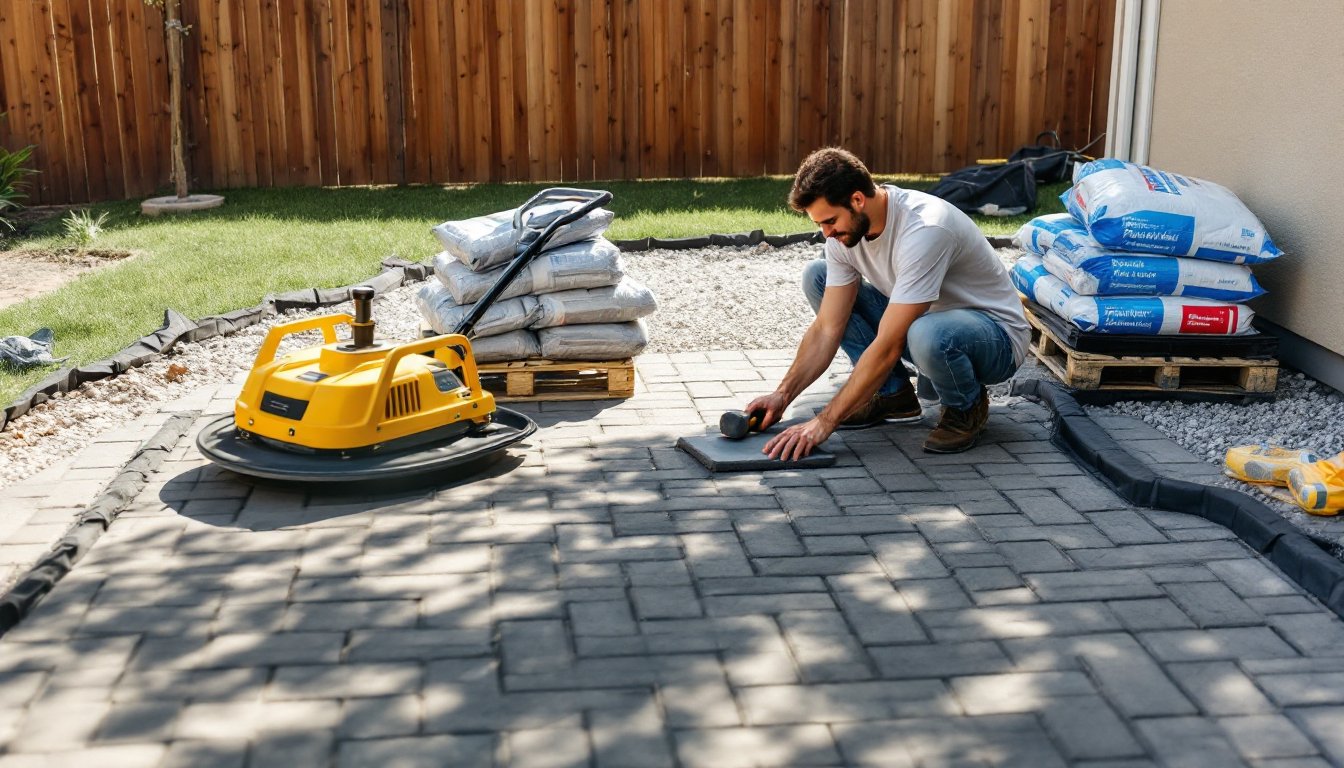
Installing outdoor patio pavers offers homeowners a practical, long-lasting alternative to poured concrete or wood decking. Unlike monolithic slabs that crack and settle unevenly, individual pavers shift with freeze-thaw cycles without catastrophic failure. They handle drainage better, can be pulled up and relaid if utility lines need access, and come in enough styles to suit any aesthetic, from formal bluestone to rustic tumbled brick. The installation process requires careful prep work and some heavy lifting, but it’s well within reach for a determined DIYer with a long weekend and the right base materials. This guide covers what pavers are, the main types available, how to choose the right option, and design strategies that balance looks with longevity.
Table of Contents
ToggleKey Takeaways
- Outdoor patio pavers offer superior durability and design flexibility compared to poured concrete, shifting independently during freeze-thaw cycles and allowing simple unit replacement if damage occurs.
- Meticulous base preparation with compacted gravel and sand is critical—skipping this step is the most common cause of paver failure and can lead to settling, uneven surfaces, and weed growth.
- Choose pavers based on climate conditions: dense concrete, granite, or SX-grade brick for freeze-thaw regions; natural stone like limestone or travertine for dry climates to prevent spalling.
- Herringbone patterns provide the strongest interlock and lateral resistance, making them ideal for high-traffic areas, while running bond offers simplicity and minimal waste for DIY projects.
- Budget for complete patio installation includes not only the pavers themselves but also base materials, tool rentals, and a 10–15% overage for cuts and breakage, typically totaling $800–$1,200+ for a 192 sq ft patio.
- Always wet-cut pavers and wear N95-rated dust protection when working with concrete or stone to prevent silica dust exposure and respiratory hazards.
What Are Outdoor Patio Pavers and Why Choose Them?
Patio pavers are modular surfacing units, typically 1½” to 3″ thick, made from concrete, natural stone, or fired clay. They interlock or butt tightly together over a compacted gravel-and-sand base, creating a permeable surface that lets water drain into the ground rather than pooling or running off. This permeability reduces erosion and complies with many stormwater regulations in urban jurisdictions.
Homeowners choose pavers over poured concrete for several reasons. First, individual units can shift independently during soil movement, freeze-thaw heaving, or tree-root expansion without cracking the entire surface. If one paver cracks, it’s a simple swap rather than a jackhammer job. Second, pavers offer design flexibility: mixing colors, textures, and laying patterns creates visual interest that stamped concrete struggles to match. Third, immediate usability: once the final layer of polymeric sand is swept into joints and misted, the patio is ready to walk on, no curing period required.
On the flip side, pavers demand meticulous base preparation. A poorly compacted sub-base leads to settling, lippage (uneven surface edges), and weed growth. Budget extra time for excavation, grading, and compaction. Expect to rent a plate compactor (typically around $60–$90 per day) for any project larger than a small walkway. Skipping this step is the single most common cause of paver failure.
Popular Types of Patio Pavers for Outdoor Spaces
Concrete Pavers
Concrete pavers dominate the residential market thanks to their balance of cost, durability, and color range. Manufactured under high pressure, they’re denser and stronger than poured concrete, most carry a compressive strength of 8,000 psi or higher. Standard sizes include 4″ × 8″, 6″ × 6″, 6″ × 9″, and 12″ × 12″, though specialty shapes (fans, hexagons, circles) are widely available.
Concrete pavers come in three finish styles: smooth-faced, textured (mimicking natural stone), and tumbled (edges intentionally worn for an aged look). Integral color runs through the full thickness, so chips and wear won’t expose gray substrate. Expect to pay $3–$6 per square foot for standard units and $6–$12 for premium architectural lines with multi-tonal blends or stone-like surfaces.
One trade-off: concrete pavers can fade over time under intense UV exposure. Applying a breathable acrylic sealer every two to three years helps maintain color and resists oil stains, but it adds a maintenance task that natural stone doesn’t require.
Natural Stone Pavers
Natural stone pavers, bluestone, granite, limestone, sandstone, travertine, and slate, bring unique color variation and texture that manufactured products can’t replicate. Each piece is cut or split from quarried slabs, so no two are identical. Thickness varies: flagstone may range from ¾” to 2″, while dimensional-cut pavers are milled to uniform 1½” or 2″ thicknesses for easier installation.
Bluestone and granite are the workhorses for northern climates, offering excellent freeze-thaw resistance and a slip-resistant surface when thermally finished or natural-cleft. Limestone and travertine are softer, more porous, and better suited to dry or temperate regions, they can spall (surface flaking) if water infiltrates and freezes. Sandstone falls in the middle, with durability depending on the specific quarry and mineral composition.
Cost runs $8–$20 per square foot for most natural stone, with rare or imported varieties climbing higher. Installation takes longer because irregular shapes require more cutting and fitting. A wet tile saw with a diamond blade is essential for clean cuts: rent one if the project involves more than a few dozen stones.
Brick Pavers
Brick pavers (also called paving bricks or clay pavers) are kiln-fired at high temperatures, making them harder and more weather-resistant than standard building bricks. They measure roughly 4″ × 8″ × 2¼” (actual dimensions vary slightly by manufacturer) and weigh about 5 pounds each. The earthy red, brown, and tan tones suit traditional or cottage-style landscapes.
Unlike face bricks used in walls, paving bricks have no holes or frogs (indentations): they’re solid throughout for load-bearing. Look for ASTM C902 Grade SX, which indicates severe-weathering resistance and is appropriate for freeze-thaw zones. Grade MX is acceptable only in dry climates.
Brick pavers develop character over time, moss in joints, slight color shifts, but they can also chip at edges if struck hard. Repairs are straightforward: pop out the damaged unit and drop in a replacement. Pricing sits around $4–$8 per square foot, competitive with mid-range concrete pavers. The classic running-bond or herringbone pattern suits brick’s rectangular format and provides good interlock against lateral movement.
How to Select the Right Pavers for Your Patio Project
Start by evaluating climate and soil conditions. In freeze-thaw regions (USDA zones 6 and colder), prioritize low-absorption materials: dense concrete, granite, or SX-grade brick. High-absorption stones like limestone or travertine risk spalling. Sandy, well-draining soil is ideal: heavy clay or expansive soil may require deeper excavation and additional gravel to prevent heaving.
Next, consider patio use and traffic. A dining area with furniture that slides frequently benefits from smooth, level surfaces, large-format concrete or dimensional-cut stone. A poolside patio needs slip-resistant texture and chlorine-resistant material: textured concrete or thermally finished bluestone works well. Avoid polished or honed finishes near water.
Aesthetic goals matter, but they should align with the home’s architecture. Modern homes pair well with large-format, cool-toned pavers (grays, charcoals) in linear or grid patterns. Traditional or colonial styles suit warm brick tones in herringbone or basket-weave. Mixing paver sizes and colors can look intentional or chaotic, stick to two to three colors maximum and use one size as the dominant field with a contrasting border.
Budget realities: include not just the pavers but also base materials (crushed stone, bedding sand, edge restraint, polymeric sand), tool rentals, and delivery fees. For a 12′ × 16′ patio (192 sq ft), expect roughly 1.5 to 2 tons of crushed gravel for a 4″ compacted base, 1 ton of bedding sand, and 10–15% overage on pavers to account for cuts and breakage. Total material cost for concrete pavers might run $800–$1,200: natural stone could double that.
Finally, check local building codes. Most jurisdictions don’t require permits for ground-level patios under a certain square footage (often 200 sq ft), but setback rules, drainage ordinances, and HOA guidelines may apply. If the patio abuts the house and involves grading changes, consult local code to ensure proper slope away from the foundation (minimum 2% grade, or ¼” per foot).
Design Ideas and Pattern Options for Paver Patios
Pattern choice affects both aesthetics and structural performance. Running bond (offset like subway tile) is the simplest layout, works with any rectangular paver, and provides good interlock. It’s quick to install and minimizes waste. Herringbone, pavers laid at 45° or 90° angles in a zigzag, offers the strongest interlock and is ideal for driveways or high-traffic areas. It requires more cutting at borders but resists shifting better than any other pattern.
Basket-weave (pairs of pavers rotated 90°) suits square or 2:1 rectangular units and delivers a classic, formal look. It’s moderately easy to lay but offers less lateral strength than herringbone. Random or Ashlar patterns mix multiple sizes (common with natural stone) for an organic, Old World feel. They’re time-intensive and require careful planning to avoid long, continuous joints that can create weak lines.
Incorporating a contrasting border (different color or material) visually frames the space and provides a clean edge for cutting the field pattern. Soldier-course borders (pavers turned perpendicular to the field) are traditional: sailor-course (laid flat, parallel) offers a subtler transition. Borders also simplify edge restraint installation by giving a straight reference line.
Color blending adds depth. Rather than opening one pallet at a time, pull pavers from three pallets simultaneously to randomize shade variation, this prevents banding or patchy color zones. For large patios, consider a two-tone or multi-blend approach: a lighter field with darker accents or borders breaks up visual monotony without overwhelming.
Curved edges and inset features (fire-pit surrounds, planting pockets) introduce custom flair but demand more labor. Curves require cutting pavers to fit the arc: a wet saw and patience are non-negotiable. Mark curves with a garden hose or spray paint before excavation to visualize the layout. Insets should be planned during base prep so the gravel and sand layers account for the feature’s footprint.
Safety note: Always wear safety glasses and hearing protection when cutting pavers, and a dust mask rated N95 or higher when dry-cutting concrete or stone. Silica dust from concrete and stone is a serious respiratory hazard. Wet-cutting reduces dust but creates slurry: set up a wash area away from storm drains.
Finally, seal or don’t seal based on the material and desired maintenance. Sealers enhance color and inhibit stains but require reapplication and can create a slippery film if over-applied. Concrete and brick benefit most: natural stone often looks better left natural, allowing it to weather and patina over time.