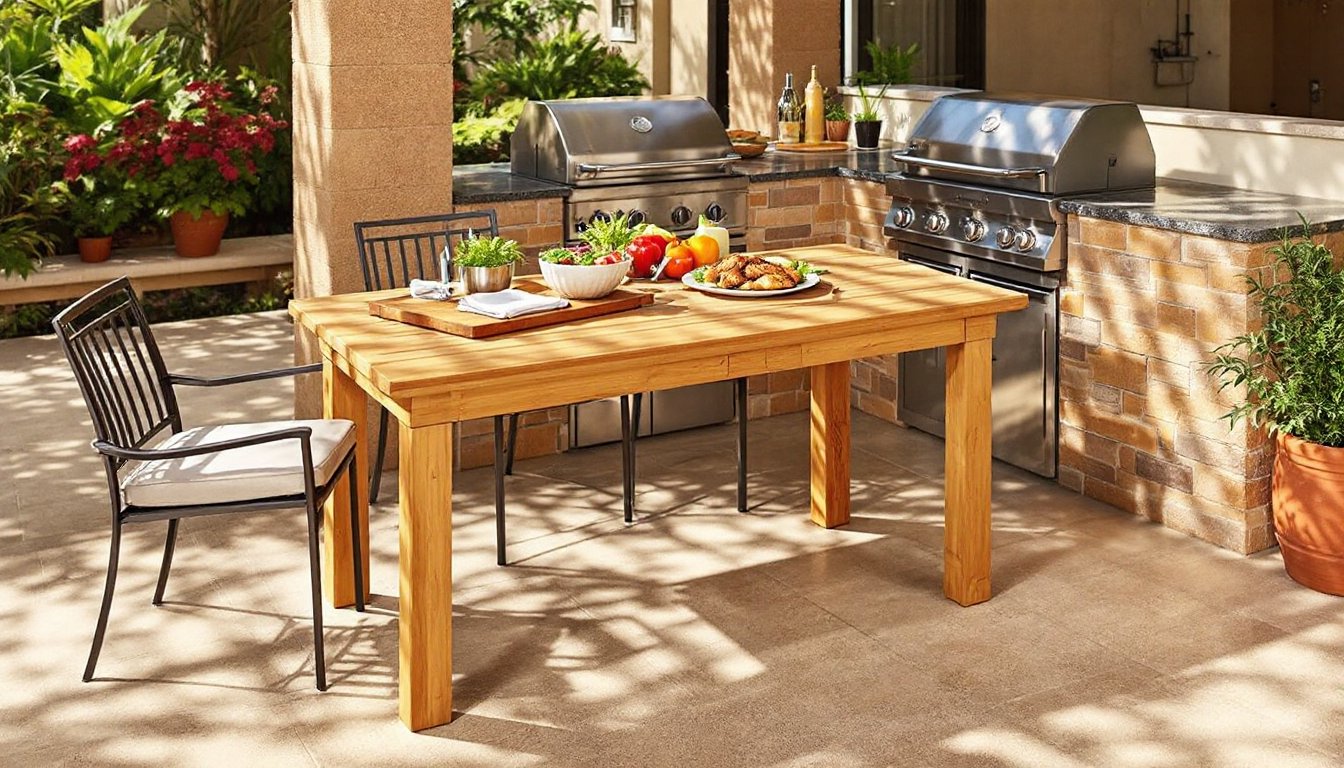
An outdoor kitchen isn’t complete until it has a table that can handle real use, not just look good in photos. The right outdoor kitchen table bridges the gap between prep station and gathering spot, enduring weather, spills, and the occasional dropped knife without falling apart. Choosing one means balancing material durability, spatial constraints, and how the homeowner actually plans to use the space. This guide walks through the essential factors, from weather-resistant materials to sizing strategies, so DIYers and outdoor enthusiasts can invest in a table that works as hard as it looks good.
Table of Contents
ToggleKey Takeaways
- An outdoor kitchen table must serve multiple functions—prep station, landing zone for hot cookware, and serving surface—making material durability and proper sizing essential to its success.
- Teak is the gold standard for wood outdoor kitchen tables due to its natural water resistance and minimal maintenance, while stainless steel excels in active cooking zones for its heat and corrosion resistance.
- Choose a counter-height table at 36 inches to match grill and island heights, and allow at least 36–48 inches of clearance on all sides for safe, comfortable food prep and traffic flow.
- Regular maintenance tailored to your table’s material—including annual wood sealing, hardware checks, and seasonal protection—extends the outdoor kitchen table lifespan to 10–20 years or more.
- Stone and tile-topped tables offer unmatched heat resistance for direct grill-to-table transfers, but require robust support frames and periodic sealing to prevent staining from oils and food acids.
Why Every Outdoor Kitchen Needs the Right Table
An outdoor kitchen table serves multiple roles that a typical patio dining set can’t. It functions as a landing zone for hot pans coming off the grill, a prep surface for chopping and seasoning, and a serving area when entertaining. Without a dedicated table, homeowners end up shuttling dishes back and forth to the indoor kitchen or balancing plates on unstable surfaces.
The right table also anchors the layout. It defines traffic flow, separates cooking zones from seating areas, and provides a visual centerpiece that ties together grills, sinks, and storage. A poorly chosen table, too small, too flimsy, or made from materials that warp in humidity, becomes a liability rather than an asset.
Durability is non-negotiable. Outdoor kitchen tables face UV exposure, temperature swings, moisture, grease, and food acids. Unlike indoor furniture, they can’t be babied. The ideal table withstands these conditions for years with minimal upkeep, making material choice the single most important decision in the selection process.
Top Materials for Outdoor Kitchen Tables That Last
Weather-Resistant Wood Options
Teak remains the gold standard for outdoor wood furniture. Its natural oils repel water and resist rot, insects, and UV damage. Teak requires no sealing, left untreated, it weathers to a silver-gray patina. For those who prefer the original honey tone, an annual application of teak oil maintains color. Expect to pay $800–$2,500 for a quality teak table, depending on size and construction.
Cedar offers a budget-friendly alternative with natural rot resistance, though it’s softer and more prone to dents than teak. Western red cedar handles moisture well and emits a pleasant aroma. It benefits from a penetrating wood sealer applied every 1–2 years. Prices typically range from $300–$900.
Acacia has gained popularity as a mid-range option. It’s harder than cedar but requires more maintenance than teak, plan on sealing it annually with a UV-resistant exterior wood finish. Acacia darkens beautifully over time but will crack if not properly maintained in dry climates.
All wood tables should have adequate drainage. Look for slatted tops rather than solid planks to prevent water pooling, which accelerates rot even in resistant species.
Metal and Stone Alternatives
Stainless steel tables excel in active cooking zones. Commercial-grade 304 stainless resists corrosion, handles hot pans without damage, and cleans with a simple wipe-down. The material doesn’t harbor bacteria, making it ideal for food prep. Drawbacks include heat retention in direct sun and visible fingerprints. Tables with a brushed finish hide smudges better than polished surfaces. Budget $600–$1,800 for a well-constructed stainless table.
Powder-coated aluminum provides a lightweight, rust-proof option at $400–$1,200. The powder coating protects the metal and comes in various colors, though it can chip if struck hard. Aluminum won’t rust, but the coating may need touch-ups every few years in harsh coastal environments.
Granite or concrete tops deliver unmatched heat resistance and visual impact. A granite slab can go straight from grill to table without trivets. But, stone requires a robust base, expect the table frame to support 200+ pounds for a 4′ × 6′ top. Both materials need sealing to prevent staining from oils and acids. Granite runs $1,000–$3,000 installed, while poured-in-place concrete offers a DIY option at lower material cost but significant labor investment.
Tile-topped tables with steel or treated wood bases split the difference, offering heat resistance and customization at $500–$1,500. Use frost-proof porcelain or glazed ceramic tiles rated for outdoor use, and ensure grout lines are properly sealed with a penetrating sealer to prevent moisture infiltration and mildew.
How to Size Your Outdoor Kitchen Table for Any Space
Sizing an outdoor kitchen table requires measuring the available footprint and accounting for clearances around the table. The International Residential Code doesn’t specify outdoor kitchen dimensions, but practical ergonomics do.
Start by measuring the space between fixed elements, grill islands, counters, walls, or planters. Allow a minimum of 36 inches of clearance on all sides where people will walk or work. For high-traffic areas or spaces where multiple cooks will move simultaneously, bump that to 42–48 inches.
Table height matters as much as surface area. Standard dining tables sit at 28–30 inches, which works for seated meals but feels low for standing prep work. Counter-height tables at 36 inches match most grill and island heights, creating a unified work surface and reducing the need to bend while prepping. Bar-height tables at 42 inches pair with taller stools but can feel awkward for food prep unless the user is particularly tall.
For surface area, calculate based on intended use. A table primarily for plating and serving needs roughly 2–3 square feet per person being served. If it doubles as prep space, add another 4–6 square feet for cutting boards, ingredient bowls, and tools. A family of four typically needs a 4′ × 3′ minimum: serious entertainers benefit from 6′ × 3′ or larger.
Don’t forget to consider the table’s footprint in winter months. If the outdoor kitchen sees off-season use or if the table stays in place year-round, ensure it won’t obstruct pathways or make the space feel cramped when not actively cooking. Some homeowners opt for modular or folding tables that can be moved or collapsed during the off-season, just ensure any folding mechanism is robust enough for repeated use and won’t fail under a loaded surface.
Style and Design Considerations for Outdoor Entertaining
The table should complement the outdoor kitchen’s overall aesthetic without clashing with existing materials. A rustic cedar table pairs naturally with stone or brick, while stainless steel suits modern kitchens with clean lines and built-in appliances.
Leg configuration affects both look and function. Four-leg tables are stable and traditional but can interfere with seating, guests’ knees hit the legs. Trestle or pedestal bases open up legroom and look substantial, though they require careful engineering to prevent tipping. Metal tube frames offer an industrial look and easy cleaning underneath.
Consider whether the table needs to be portable or fixed. Lighter materials like aluminum allow for repositioning based on sun, wind, or party flow. Heavier stone or solid wood tables stay put, which benefits windy locations but limits flexibility. Some designs include lockable casters, useful for moving the table for cleaning or storage, then locking it in place during use.
Integrated features add functionality without cluttering the space. Built-in ice troughs keep drinks cold during parties. Recessed trivets protect the surface from hot pans. Under-shelf storage holds frequently used tools or serving platters. Perforated metal tops allow rainwater to drain while still providing a stable surface.
Color choice impacts more than style, it affects perceived temperature and maintenance. Dark surfaces absorb heat and show water spots: light finishes stay cooler but may stain more visibly. In coastal areas, salt spray can etch dark metals, making lighter powder-coated finishes more practical. For wood, natural or honey tones hide minor scratches better than painted surfaces, where chips expose raw wood.
Essential Maintenance Tips to Extend Table Lifespan
Every outdoor kitchen table material has specific maintenance needs, but a few universal practices apply across the board.
Clean regularly. Grease, food residue, and organic matter accelerate deterioration. Wipe down surfaces after each use with warm soapy water and a soft cloth or sponge. For tougher buildup on metal or stone, use a degreasing dish soap and a non-abrasive scrub pad. Avoid harsh chemicals or abrasive cleaners that can damage protective finishes.
Inspect and address damage promptly. Check wood tables annually for cracks, splinters, or signs of rot, sand rough spots and reseal as needed. On metal tables, touch up any chips in powder coating with matching touch-up paint to prevent rust from starting underneath. Stone surfaces should be resealed every 1–3 years depending on the product used: water should bead on the surface rather than soaking in.
Protect during extreme weather. Even durable materials benefit from covers during prolonged rain, snow, or when not in use for extended periods. Use breathable, UV-resistant covers that won’t trap moisture against the surface. In areas with harsh winters, consider moving lighter tables into a garage or shed to prevent freeze-thaw damage.
Tighten hardware seasonally. Temperature fluctuations cause materials to expand and contract, which can loosen bolts and screws. Check and retighten all fasteners at the beginning and end of the outdoor cooking season. Replace any rusted hardware with stainless steel or galvanized fasteners.
For wood tables, reapply penetrating sealer or oil as recommended by the manufacturer, typically annually for most species. Sand lightly with 120-grit sandpaper before reapplying to ensure good adhesion. For metal tables, a coat of automotive wax can provide additional protection and make cleaning easier. Stone and tile surfaces benefit from pH-neutral cleaners that won’t break down sealers prematurely.
With consistent care matched to the material, a quality outdoor kitchen table will serve reliably for 10–20 years or more, proving that the upfront investment in the right table pays off season after season.