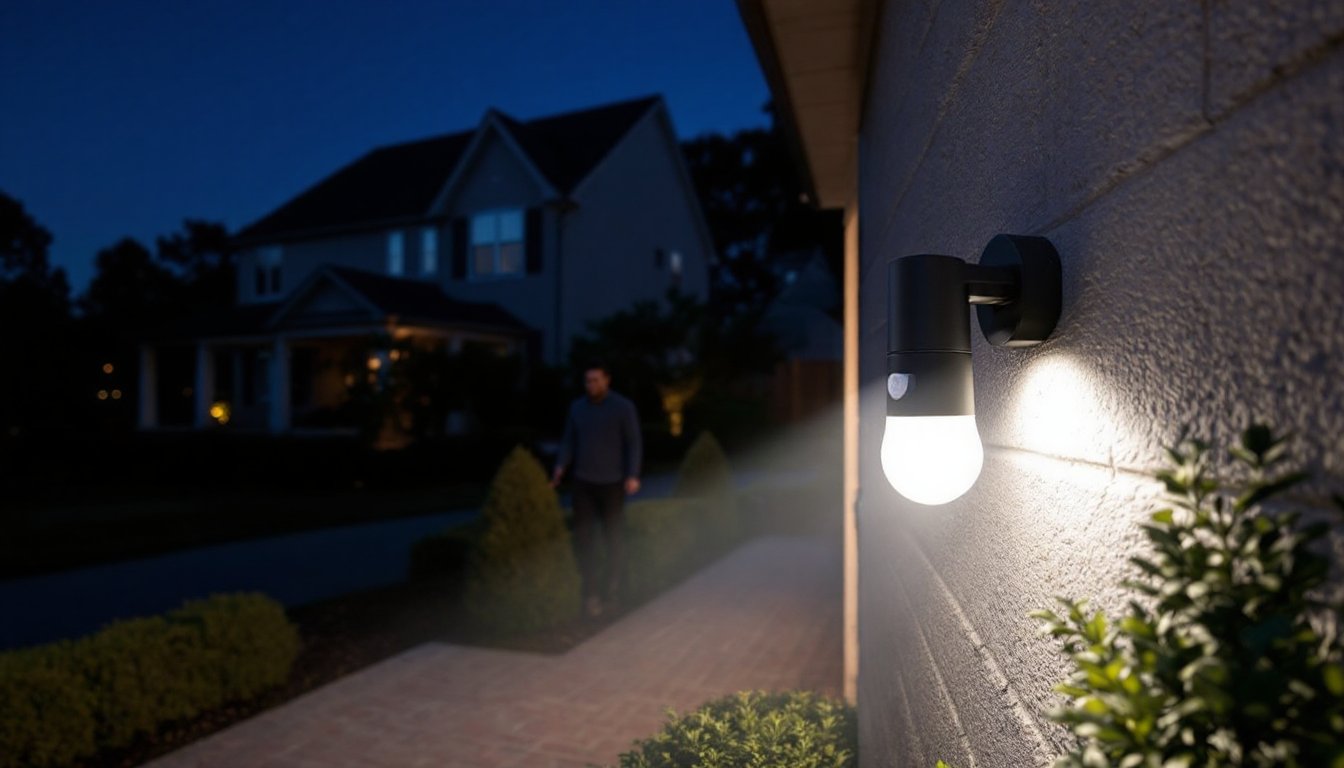
Motion sensor light bulbs have evolved from novelty items into practical security tools for homeowners. Unlike traditional outdoor lighting that burns power all night or requires manual switching, these bulbs detect movement and illuminate on demand, deterring intruders, lighting pathways, and cutting energy costs. With advances in LED efficiency and sensor technology, today’s outdoor motion bulbs offer impressive detection ranges, weather resistance, and customization options. But not all motion sensor bulbs are built for the elements. Choosing the wrong product can mean false triggers, short lifespans, or dead zones in coverage. This guide breaks down what matters when selecting a motion sensor bulb for porches, garages, driveways, and other outdoor applications.
Table of Contents
ToggleKey Takeaways
- The best motion sensor light bulbs reduce outdoor lighting costs by 70% or more annually while providing security and convenience for entryways, driveways, and pathways.
- Look for an IP65 weather resistance rating, detection range of 30-50 feet for larger areas, and adjustable sensitivity settings to minimize false triggers from wildlife or traffic.
- Proper installation height (8-10 feet above ground) and sensor angle toward the target area are critical for reliable motion detection and coverage.
- Choose 1,000-1,500 lumens for porches, 1,500-2,000 lumens for driveways, and 500-800 lumens for pathway lighting to match your outdoor space’s specific lighting needs.
- Regular lens cleaning and avoiding placement near heat sources like HVAC units prevents sensor performance degradation and reduces unwanted activations.
- Ensure your fixture’s wattage rating supports the motion sensor bulb and use a standard on/off switch rather than dimmers to avoid flickering or operational issues.
Why Motion Sensor Light Bulbs Are Essential for Outdoor Security
Motion-activated lighting is one of the simplest and most cost-effective layers of home security. A well-placed bulb eliminates dark corners where intruders can approach unnoticed. The sudden activation of light often startles potential trespassers and signals that the property is monitored or occupied.
Beyond security, these bulbs improve safety for residents and guests. They illuminate steps, walkways, and door thresholds automatically, critical during late-night arrivals or when hands are full of groceries. Older adults and those with mobility challenges benefit from not fumbling for switches in the dark.
Energy efficiency is another major advantage. Traditional outdoor floodlights left on all night can consume 50–150 watts continuously. A 15-watt LED motion sensor bulb that operates only when needed can reduce outdoor lighting costs by 70% or more over a year. Most models default to a 60–90 second timer, ensuring light only when it’s required.
Motion sensor bulbs also simplify retrofitting older fixtures. Rather than rewiring a porch light for a new motion-activated fixture, homeowners can swap in a motion sensor bulb using the existing socket, usually an E26 or E27 base. This makes upgrades accessible even for renters or those avoiding electrical work.
Top Features to Look for in Outdoor Motion Sensor Bulbs
Choosing the right bulb means matching features to the installation environment and intended use. Not every motion sensor bulb is designed to handle outdoor exposure or cover large detection zones.
Detection Range and Sensitivity Settings
Detection range determines how far from the bulb movement will trigger activation. Entry-level bulbs detect motion within 15–20 feet, suitable for small porches or side doors. Mid-range models extend that to 30–40 feet, covering most driveways and front yards. High-performance units can reach 50+ feet, ideal for large properties or detached garages.
Detection angle is equally important. Most outdoor motion sensor bulbs offer a 120° to 180° field of view. Narrow angles work for focused areas like doorways: wider angles cover broader zones but may trigger more false positives from passing cars or animals.
Adjustable sensitivity settings help reduce unwanted activations. Some bulbs allow users to dial down sensitivity in high-traffic areas or near busy streets, while others include dusk-to-dawn sensors to disable motion detection during daylight hours. Look for models that offer at least two sensitivity levels and adjustable on-time durations (30 seconds to 5 minutes is typical).
Weather Resistance and Durability Ratings
Outdoor bulbs must withstand rain, snow, humidity, temperature swings, and UV exposure. The IP rating (Ingress Protection) indicates how well a bulb resists water and dust. For outdoor use, a minimum of IP65 is recommended, this means the bulb is dust-tight and can handle water jets from any direction (heavy rain, hose spray).
Bulbs in fully enclosed fixtures may tolerate lower ratings, but open or partially covered fixtures demand IP65 or higher. Some manufacturers specify not suitable for enclosed fixtures due to heat buildup, so check compatibility if installing in a closed globe or lantern-style light.
Operating temperature range matters in extreme climates. Quality outdoor motion sensor bulbs function reliably from -20°F to 120°F (-29°C to 49°C). Cheaper models may fail in winter cold or summer heat, leading to sensor malfunctions or shortened LED lifespan.
Look for bulbs with polycarbonate or UV-stabilized lenses on the sensor module. These materials resist yellowing and cracking from sun exposure, which can degrade detection performance over time.
Best Motion Sensor Light Bulbs for Different Outdoor Needs
Different outdoor areas have distinct lighting and detection requirements. Matching the bulb to the application improves performance and user satisfaction.
Front porches and entryways benefit from bulbs with 1,000–1,500 lumens and 120° detection angles. This provides bright, welcoming light without blinding visitors. Color temperature around 3000K (warm white) creates an inviting appearance, while 5000K (daylight) offers better visibility for security cameras. Bulbs with adjustable timer settings (60–180 seconds) let homeowners balance convenience and energy savings.
Driveways and garages require higher output, 1,500–2,000 lumens, and longer detection ranges (30–50 feet). Wide detection angles (150–180°) ensure the bulb triggers as vehicles approach or when walking to side doors. Bulbs with dual-brightness modes (low ambient light with motion boost) can provide constant low-level illumination that ramps up when motion is detected, improving visibility for cameras.
Backyards and patios often need softer lighting (800–1,200 lumens) to avoid harsh glare during evening gatherings. Motion sensor bulbs here should have adjustable sensitivity to prevent activation from small animals or wind-blown branches. Some models offer stay-on override modes via wall switches, allowing manual control when hosting outdoor events.
Pathway and landscape lighting works best with lower-wattage bulbs (500–800 lumens) and narrow detection zones. Overlapping coverage from multiple bulbs creates a continuous lit path without excessive brightness. Look for bulbs with longer on-times (3–5 minutes) to keep walkways illuminated during transit.
For properties with frequent wildlife activity, consider bulbs with animal immunity settings or higher trigger thresholds that ignore small heat signatures. No motion sensor is perfect, but these features reduce nuisance activations.
Installation Tips and Common Mistakes to Avoid
Installing a motion sensor bulb is straightforward, but proper placement and setup make the difference between reliable operation and constant frustration.
Turn off power at the breaker before installing any bulb, especially in outdoor fixtures where moisture may be present. Verify the fixture is off with a non-contact voltage tester. Wear safety glasses when working overhead.
Check that the fixture’s wattage rating matches or exceeds the bulb. Most LED motion sensor bulbs draw 9–15 watts but may have equivalency ratings (e.g., 100W incandescent equivalent). If the fixture is rated for lower wattage or marked “not for use with motion sensor bulbs,” find a compatible fixture.
Mounting height and angle affect detection performance. Install bulbs 8–10 feet above ground for optimal coverage. Mounting too high can create blind spots directly below: too low reduces range and increases false triggers. Angle the sensor toward the area of interest, most bulbs have adjustable sensor modules that pivot independently of the light.
Avoid pointing sensors at heat sources like dryer vents, HVAC units, or sunlit pavement. These can cause false triggers as temperature fluctuations mimic movement. Similarly, keep sensors away from tree branches and shrubs that sway in wind.
Test and adjust after installation. Walk through the detection zone at various angles and distances, adjusting sensitivity and range settings as needed. Most bulbs require a 20–30 second warm-up after power-on before the sensor activates, so allow this initial period during testing.
If the bulb flickers or fails to stay on, check for loose connections or incompatible dimmer switches. Motion sensor bulbs should not be used with dimmers unless explicitly rated for it. Some smart switches or timers may also interfere with sensor operation, if issues persist, replace with a standard on/off switch.
Clean the sensor lens every few months. Dust, pollen, and insect debris can reduce sensitivity and range. Use a soft, damp cloth, avoid abrasive cleaners that scratch the lens.
Conclusion
Motion sensor light bulbs offer an affordable, energy-efficient upgrade for outdoor security and convenience. Prioritizing detection range, weather resistance, and adjustable settings ensures reliable performance across different environments. Proper installation height, angle, and regular sensor maintenance prevent common issues like false triggers or dead zones. Whether lighting a front porch, driveway, or backyard path, the right motion sensor bulb turns a passive fixture into an active layer of home safety.